
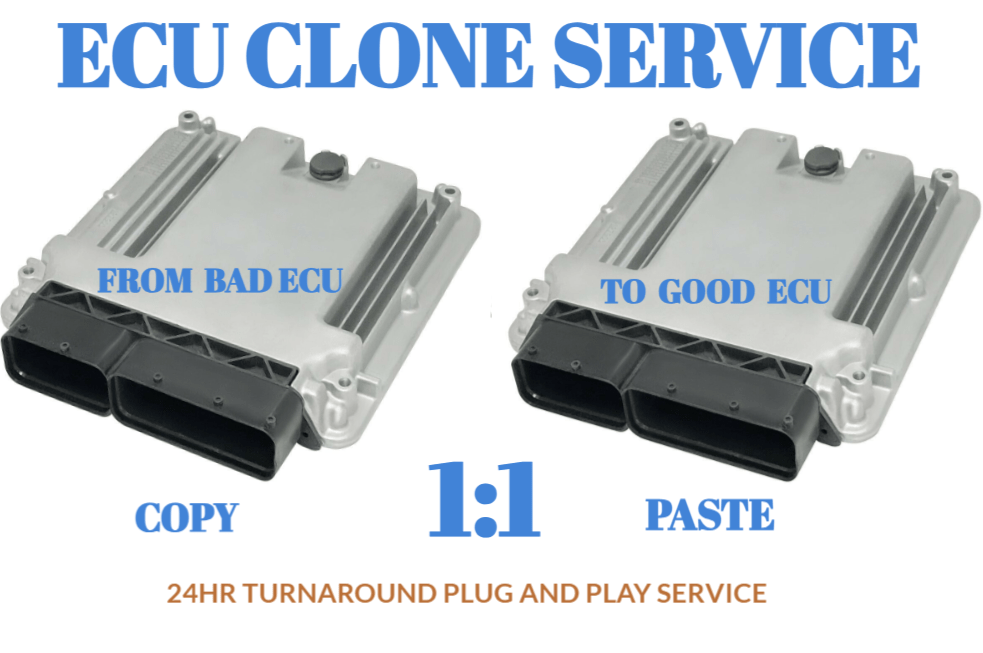
Caterpillar ECU Clone & ECM Programming Service
$300.00
Caterpillar ECM clone & bench programming service — every Cat ADEM-III / ADEM-IV / ADEM-V ECM from 1990 to 2026. Covers on-highway truck (C7 / C9 / C11 / C13 / C15 / 3406E), off-highway construction (C2.2 / C3.4 / C4.4 / C6.6 / C7.1 / C9.3 / C13 / C18 / C27 / C32 Tier 4 Final), mining (C175-16/20, 3524B HD EUI), 3500 series industrial / marine / oil & gas / locomotive (3508 / 3512 / 3516 / 3516E), and the full machine lineup: excavators 311–395, wheel loaders 906–994K, dozers D3–D11T, articulated trucks 725–777G, mining trucks 785–797F, backhoes 416F2–450F2, skid steers 232D3–299D3, motor graders 12M3–24M, compactors, marine engines, gensets. 1:1 EEPROM + Flash clone preserves engine serial, FLS / FTS encrypted values, rating code, injector trim codes, DPF / DEF / SCR / NOx calibration, customer parameters, Pittsburgh Power / Dragon / Magnum / Diesel Power Source overlays. No Cat ET. No FLS/FTS factory password. No dealer. Save $4,500-$24,000+ vs. dealer ECM replacement.
- Same-day processing before 2pm — fleet-down emergencies
- FLS/FTS preserved without factory password
- Engine serial, rating code, injector trim, DPF/DEF preserved
- Cat 7-digit XXX-XXXX part number coverage
- 25+ years experience, in business since 1999
- 1:1 clone + free recheck guarantee
Caterpillar ECU Clone & ECM Programming Service — All CAT Engines, Heavy Equipment, Marine & Power Generation 1990–2026
Nationwide mail-in service — ship your Caterpillar ECM to us from anywhere in the United States. We operate from 2 locations; the exact shipping address will be shown on your order receipt at checkout, routed based on tool availability and fastest turnaround for your specific engine or machine.
Caterpillar ECM clone performed by Dan Karman — heavy equipment ECM specialist since 1999, online since 2006. Full bench clone process documented on our YouTube channel. Reference updated April 2026.
Every Caterpillar ADEM-III, ADEM-IV, ADEM-V and legacy A3 / A4 / A5 ECM from 1990 through 2026 — on-highway truck engines (C7, C9, C11, C13, C15, C18, C32, 3406E, 3406B/C, 3408, 3412), off-highway construction (C2.2, C3.4, C4.4, C6.6, C7.1, C9.3, C13, C18, C27, C32, C175), mining (C175-16, 3500 series, 3508, 3512, 3516, C32 mining), marine (C7 / C9 / C18 / C32 marine, 3508B / 3512C / 3516E marine), power generation (C7.1 / C13 / C15 / C18 / C32 gensets, 3406 / 3408 / 3412 / 3500 series gensets), excavators (311 / 313 / 316 / 320 / 323 / 326 / 330 / 336 / 345 / 349 / 352 / 374 / 390 / 395), wheel loaders (906 / 908 / 910 / 924 / 926 / 930 / 938 / 950 / 962 / 966 / 972 / 980 / 982 / 988 / 990 / 992 / 993K / 994 / 994K), bulldozers (D3 / D4 / D5 / D6 / D6XE / D7 / D7E / D8 / D9 / D10 / D11), articulated trucks (725 / 730 / 735 / 740 / 745 / 770 / 772 / 773 / 775 / 777), mining haul trucks (785 / 789 / 793 / 794 / 795F / 797F), backhoe loaders (416 / 420 / 422 / 428 / 432 / 434 / 444 / 450), skid steer loaders (232D3 / 236D3 / 242D3 / 246D3 / 257D3 / 259D3 / 262D3 / 272D3 / 277D3 / 279D3 / 285 / 287D3 / 289D3 / 297D3 / 299D3), compact track loaders (247B / 257B / 277B / 287B / 289 / 297 / 299), telehandlers (TL642D / TL943D / TL1055D / TL1255D), motor graders (12M / 14M / 16M / 18M / 24M / 140M / 160M / 120 / 12), compactors (CS44 / CS54 / CS56B / CS64 / CS66B / CS68B / CS78B / CS86B), pipelayers (PL61 / PL83 / PL87), feller bunchers / forestry (501HD / 521B / 522B / 541 / 552), waste handlers (816K / 826K / 836K), and the entire 3500 series industrial / marine / oil & gas / locomotive lineup — can be 1:1 cloned to a donor ECM. Karmanauto reads the EEPROM and Flash memory bit-for-bit, writes them to your replacement ECM, preserves your original engine serial number, machine serial number, equipment hours, FLS (Full Load Setting), FTS (Full Throttle Setting), rating code, customer parameters, Personality Module / Flash File, ADEM cooling fan calibration, DPF (Diesel Particulate Filter) regeneration schedule + soot mass + ash mass values, DEF (Diesel Exhaust Fluid) / SCR controller calibration on Tier 4 Final engines, NOx sensor learned values, EGR (Exhaust Gas Recirculation) calibration, ARD (Aftertreatment Regeneration Device) calibration, idle shutdown timer, fuel pump and injector trim codes (Cat C-series injector trim 80% / 100% codes), and any aftermarket tune overlay loaded by Pittsburgh Power, Dragon Trucking, Magnum Tuning, JEGS, Diesel Power Source, or any third-party ECM reflash, and returns a plug-and-play replacement — no Caterpillar ET (Electronic Technician) dealer programming, no FLS/FTS factory password, no rating-code re-entry required.
⚠ Why CAT ECM failure costs you $800–$2,500/day in fleet downtime — and how a $300 clone gets you running tomorrow
A failed Caterpillar ECM stops your money-making asset cold. A C13-powered tri-axle dump truck sitting idle costs $800-$1,200/day in lost revenue. A C32-powered haul truck on a mine site sitting idle costs $5,000-$15,000/day. A C175 mining truck ECM failure can cost a mine $50,000+/day. The Caterpillar dealer fix path is brutally expensive AND slow:
- New CAT C-series ECM (C7, C9, C13, C15): $3,500–$6,000 from CAT parts
- New CAT C18 / C27 / C32 ECM: $4,500–$8,500
- New CAT C175 mining / 3500-series ECM: $8,000–$15,000+
- Dealer Cat ET programming labor: $200–$400/hr, typically 4-12 hours
- FLS / FTS factory password unlock (required for many programming operations): often another dealer charge or refused entirely on used parts
- Parts wait time: 2-14 days for ECM delivery (longer on C175 / 3500 series)
- Total dealer fix bill: $5,000–$25,000+, ready in 4–14 days
Our 1:1 clone: $300 service fee + the cost of a used donor ECM (typically $400-$1,500 from used-parts resellers, much less than new). Same-day clone processing for ECMs received by 2pm. Total turnaround typically 2-4 business days from ship to running engine. The cloned donor presents your engine serial number, your FLS/FTS values, your rating code, your DPF soot/ash values, your customer parameters, your fuel injector trim codes — the donor IS your ECM as far as the engine is concerned. Start, run, work.
Total savings: $4,500-$24,000+ vs. dealer path, plus you’re back in service 4-14 days sooner. That’s why fleet owners, owner-operators, mine maintenance, ag operators, and CAT independent shops ship us thousands of ECMs every year.
A new Caterpillar ECM from the dealer is serial-number-blank, rating-code-blank, FLS/FTS-blank, and customer-parameter-blank. After install, the CAT dealer must use Cat ET to write your engine serial number, write your machine serial number (where applicable), enter the correct rating code for your specific engine application (a C13 ACERT in an over-the-road truck has a different rating code than a C13 in a marine application, or a C13 in a wheel loader, or a C13 in a genset), set the FLS (Full Load Setting) and FTS (Full Throttle Setting) — and FLS/FTS requires the factory password, which CAT controls. The dealer must also re-enter customer parameters (idle shutdown timer, PTO settings, vehicle speed limits, soft cruise, etc.), program injector trim codes (each individual injector has a unique trim code, typically a multi-character code printed on the injector body), set the DPF service intervals, and re-pair the aftertreatment controller. On Tier 4 Final engines (C2.2 / C3.4 / C4.4 / C6.6 / C7.1 / C9.3 / C13 / C18 / C27 / C32 / C175 Tier 4 Final), the dealer must additionally re-program DEF (Diesel Exhaust Fluid) dosing parameters, SCR (Selective Catalytic Reduction) catalyst aging compensation, NOx sensor learned values, and ARD (Aftertreatment Regeneration Device) parameters. Dealer total labor charge: $800–$3,500 on top of the ECM cost.
Our 1:1 EEPROM + Flash clone reads your original ECM at the chip level, writes the entire firmware + base calibration + engine serial number + machine serial number + FLS + FTS + rating code + customer parameters + injector trim codes + DPF soot/ash values + DEF dosing calibration + SCR catalyst aging + NOx learned values + ARD parameters + cooling fan map + any Pittsburgh Power / Dragon / Magnum / Diesel Power Source aftermarket tune overlay to a donor ECM, and ships it back same day. No Cat ET, no FLS/FTS password, no dealer, plug-and-play. Your CAT engine fires on the first crank, runs at the correct rating, hits boost, builds full torque.
Covers every Caterpillar ADEM-III / ADEM-IV / ADEM-V / A3 / A4 / A5 ECM 1990–2026 — including on-highway truck engines (C7 ACERT 2003-2010 in Kenworth T300/T800/W900 + Peterbilt 320/335/337/365 + Freightliner Business Class + International, C9 ACERT 2003-2010, C11 ACERT 2003-2010, C13 ACERT 2003-2010 in Kenworth T800/W900 + Peterbilt 388/389 + Freightliner Coronado/Argosy/Cascadia, C15 ACERT 2003-2010 + Single Turbo C15 2007-2010 + Twin Turbo C15 2003-2007 in Kenworth T800/T880/W900 + Peterbilt 379/389 + Freightliner Argosy/Coronado/Cascadia + Western Star 4900/5700/6900, C18 ACERT 2007-2026 industrial + marine + genset, 3406E / 3406B / 3406C 1990-2004 legacy in older Kenworth/Peterbilt/Freightliner/Volvo/Mack/International, 3408 / 3412 1990-2003 legacy industrial), Tier 4 Final off-highway construction engines (C2.2 / C3.4 / C4.4 / C6.6 / C7.1 / C9.3 / C13 / C18 / C27 / C32 Tier 4 Final 2014-2026 with DPF + SCR + DEF + DOC), mining-grade C175 (C175-16 / C175-20 used in 793F / 794AC / 795F / 797F mining trucks, 994 / 994K wheel loaders, large dozers), 3500 series industrial / marine / oil & gas / locomotive (3508 / 3508B / 3508C, 3512 / 3512B / 3512C, 3516 / 3516B / 3516C / 3516E, plus 3500 series in EMD-acquired locomotive applications), excavators (311F / 311E / 313F / 316F / 320 / 320GC / 320 GC / 323F / 326F / 330F / 336F / 345 / 349F / 352F / 374F / 390F / 395 — the entire excavator lineup from 11-ton to 95-ton class), wheel loaders (906K / 908K / 910K / 924K / 926M / 930M / 938M / 950M / 950 GC / 962M / 966M / 972M / 980M / 982M / 988K / 988K XE / 990K / 992K / 992 / 993K / 994K — the entire wheel loader range from compact to 200-ton class), bulldozers / track-type tractors (D3K2 / D4K2 / D5K2 / D5R / D6K2 / D6N / D6T / D6XE hybrid / D7E hybrid / D7R / D8R / D8T / D9R / D9T / D10T / D10T2 / D11R / D11T — the entire dozer lineup including the world-class D11T mining dozer at 1,150 HP), articulated trucks (725C2 / 730C2 / 730 EJ / 735 / 740 / 740 GC / 740 EJ / 745 / 770G / 772G / 773G / 775G / 777G — Cat dump trucks), mining haul trucks (785G / 789D / 793F / 794AC / 795F AC / 797F — the 797F is the world’s largest mechanical-drive mining truck at 400 short tons payload, powered by Cat 3524B HD EUI), backhoe loaders (416F2 / 420F2 / 422F2 / 428F2 / 432F2 / 434F2 / 444F2 / 450F2 — the Cat backhoes that dominate utility work), skid steer loaders (232D3 / 236D3 / 242D3 / 246D3 / 257D3 / 259D3 / 262D3 / 272D3 / 277D3 / 279D3 / 285 / 287D3 / 289D3 / 297D3 / 299D3 / 299D3 XE — the Cat skid steers and CTLs that own the rental fleet market), compact track loaders (247B / 257B / 277B / 287B + the newer D3 series CTLs), telehandlers (TL642D / TL943D / TL1055D / TL1255D), motor graders (12M3 / 14M3 / 16M3 / 18M3 / 24M / 140M3 / 140 GC / 150 / 160M3), compactors (CS44 / CS54B / CS54B / CS56B / CS64B / CS66B / CS68B / CS78B / CS86B), pipelayers (PL61 / PL83 / PL87), feller bunchers and forestry equipment, waste handlers (816K landfill compactor, 826K landfill compactor, 836K landfill compactor), marine propulsion (C7 / C9 / C18 / C32 marine, 3508B / 3512C / 3516E marine), generator sets / power generation (C7.1 / C13 / C15 / C18 / C32 gensets up to 5000+ kVA, 3500 series gensets for hospital / data center / mining backup power, 3406 / 3408 / 3412 legacy gensets), oil & gas engines (C18 / C27 / C32 / 3508 / 3512 / 3516 in well-service / fracking applications), and the entire CAT industrial engine lineup. When a CAT ECM fails — and it happens on 2003-2010 ACERT engines (C7/C9/C11/C13/C15) from the notorious EGR / ACERT-related ECM-cooling issues, on Tier 4 Final engines from DEF tank heater failures cascading to ECM, on any C15/C18/C32 from heat damage in chassis-mounted positions, on legacy 3406E from EEPROM degradation after 25+ years, on excavator / wheel loader / dozer ECMs from cab water intrusion, on mining truck ECMs from vibration-fatigue solder failures, on marine engine ECMs from salt-water corrosion at the connector, on any CAT ECM after a botched Pittsburgh Power / Dragon / Magnum / Diesel Power Source aftermarket flash, or after dealer-side Cat ET programming with the wrong FLS/FTS values — the dealer’s only fix is a brand-new VIN/serial-blank ECM plus Cat ET dealer programming labor (and the FLS/FTS factory password). We clone your original ECM 1:1 to a donor unit, preserve every byte of EEPROM (engine serial number, machine serial number, FLS, FTS, rating code, customer parameters, injector trim codes, DPF soot/ash values, DEF dosing calibration, SCR catalyst aging, NOx sensor learned values, ARD parameters, cooling fan calibration, idle shutdown timer, PTO settings, any Pittsburgh Power / Dragon / Magnum overlay), and return a fully-functional plug-and-play replacement. No Cat ET. No FLS/FTS factory password. No dealer. Karmanauto has been cloning Caterpillar ECMs since the original ADEM-III era in the early 1990s — every generation since (ADEM-IV, ADEM-V, A3 / A4 / A5 truck-spec, Tier 4 Final aftertreatment) decoded and cloned on the bench.
Don’t want to read the whole page? Here’s how it works.
Three simple steps. No dealer. No Cat ET. No FLS/FTS password. Your original ECM cloned to a donor and ready to install.
Add to Cart & Pay
Click Add to Cart on this page and complete checkout. You’ll receive an email receipt with your order number and the shipping address to send your ECM to.
Print Receipt & Ship
Print your receipt or write your order number on a slip of paper and drop it in the box with both the original ECM and your donor ECM. Ship to the address on your receipt — we operate from two locations, and your receipt tells you which one. Overnight FedEx recommended for fleet-down situations.
Cloned & Returned
Same-day processing for ECMs received before 2pm. We clone your original EEPROM + Flash 1:1 to the donor ECM, preserve engine serial number, FLS/FTS, rating code, injector trim, DPF/DEF values, and ship both ECMs back. Plug donor in, key on, CAT fires.
Same-day processing for ECMs received by 2pm. Total turnaround ship-to-running is typically 2–4 business days. Overnight options available for fleet-down emergencies — call ahead.
Common Caterpillar ECM failure modes — why your CAT died
Caterpillar ADEM-series ECMs are engineered for heavy-duty industrial service, but after 15-30 years of duty cycles, certain CAT-specific failure modes show up repeatedly on the bench:
- ACERT C-series (2003-2010 C7/C9/C11/C13/C15) ECM cooling / EGR-related failures — The 2003-2010 Cat ACERT (Advanced Combustion Emissions Reduction Technology) era introduced higher operating temps and additional electronics that stressed the ADEM-IV ECM. The ECM is typically mounted on the engine block where it gets thermally cycled hard. After 500,000-800,000 miles (on-highway) or 8,000-15,000 hours (off-highway), ACERT C-series ECMs commonly develop voltage rail sag, intermittent fault codes, hot-engine derating, and eventually no-comm to Cat ET. The C15 ACERT (single turbo and twin turbo variants) is especially well-known for ECM thermal failures.
- Tier 4 Final aftertreatment cascade failures (2014-2026 C2.2 / C3.4 / C4.4 / C6.6 / C7.1 / C9.3 / C13 / C18 / C27 / C32 Tier 4 Final) — Tier 4 Final added DPF + DEF + SCR + DOC aftertreatment that’s controlled by the ECM. When the DEF tank heater fails, when the NOx sensor goes bad, when the DPF differential pressure sensor fails, when the EGR cooler develops a leak, when the SCR catalyst ages out — all of these cascade through the ECM and can corrupt EEPROM. Symptoms: persistent CEL, derate countdown (10 min → 5 min → engine shutdown), forced idle, MIL on. Sometimes the ECM itself is fine and the cascading sensor data corrupts learned values; sometimes the ECM is permanently damaged. We clone before terminal damage.
- Cab water intrusion on excavators / wheel loaders / dozers / backhoes — Heavy equipment cabs leak. Years of water intrusion from rain, washing, and condensation finds its way into the cab-mounted ECM connector or the under-seat ECM bay. Symptoms: random sensor faults, intermittent no-start, eventual permanent ECM damage. Affects every machine type: 320 / 330 / 336 / 349 / 374 excavators, 938 / 950 / 966 / 980 / 988 wheel loaders, D6 / D7 / D8 / D9 / D10 dozers, 416 / 420 / 430 / 450 backhoes, 12M / 14M / 16M motor graders.
- Mining truck vibration-fatigue ECM failures (785 / 789 / 793 / 794 / 795F / 797F) — Mining haul truck ECMs see brutal vibration cycles. After 30,000-50,000 operating hours, solder joint fatigue inside the ECM causes intermittent comms, voltage rail dropouts, and eventual hard failures. The 797F (world’s largest mechanical-drive mining truck) carries the Cat 3524B HD EUI ECM which is famously expensive ($12,000-$18,000 dealer-new). We clone these every week.
- 3500 series industrial / marine / oil & gas ECM failures — 3508 / 3512 / 3516 (V-block 8 / 12 / 16 cyl industrial engines used in marine, locomotive, fracking, mining, hospital backup power) carry expensive ADEM-IV/V ECMs ($6,000-$15,000 dealer-new). Heat, vibration, and 24/7 duty cycles in genset / fracking applications develop EEPROM corruption after 30,000+ hours.
- C175 mining ECM failures (994 / 994K wheel loaders, 793F / 795F / 797F mining trucks) — The C175 (16-cyl or 20-cyl mining engine, 2300-4000 HP) is the largest CAT off-highway engine. Its ECM is the most expensive in the lineup ($10,000-$18,000 dealer-new) and ECM failures shut down million-dollar mining operations. We process C175 ECM clones for mining operations across the US, Canada, Australia, Chile, and Indonesia.
- Marine engine ECM salt-water corrosion (C7 marine / C9 marine / C18 marine / C32 marine / 3508B / 3512C / 3516E marine) — Marine ECMs in commercial fishing, tug, yacht, and offshore applications develop salt-water connector corrosion after 5-10 years. Even sealed marine-spec ECMs degrade. Symptoms: random sensor faults, intermittent no-start, NMEA-2000 / J1939 communication dropouts. We clone the data to a fresh marine donor before the corrosion becomes terminal.
- Genset ECM 24/7 thermal cycling (data center / hospital / mining backup power) — C7.1 / C13 / C15 / C18 / C32 genset ECMs run prime + standby + emergency power loads. Constant thermal cycling on prime-power gensets corrupts EEPROM after 20,000+ hours. Hospital backup gensets and data center backup gensets cannot tolerate ECM failure — we offer same-day clone for emergency genset situations.
- Failed Pittsburgh Power / Dragon / Magnum / Diesel Power Source ECM flash (mainly on-highway C13/C15 ACERT) — Aftermarket Cat tuning is dominated by Pittsburgh Power, Dragon Trucking, Magnum Tuning, JEGS, Diesel Power Source, and a handful of independent tuners. A botched flash with the wrong file or interrupted power can lock the ECM in bootloader mode. We recover the bootloader and restore working calibration — or clone the running calibration if your original has a valid Pittsburgh Power tune you want to preserve.
- Failed dealer-side FLS/FTS programming — Even Cat dealers occasionally botch FLS / FTS programming with the wrong values for the engine application, leaving the engine in derated or no-start condition. We clone working ECMs to recover correct FLS/FTS values for the application.
- Truck cab ECM theft (on-highway C-series) — Sleeper-cab C13 / C15 ECMs are commonly stolen from over-the-road trucks parked at truck stops. The thieves know each ECM is worth $3,500-$6,000 used. The replacement process requires dealer Cat ET — and dealers typically refuse to program used / unknown-source ECMs. Owner-operators ship us their replacement ECM (often a wrecking-yard pull) and we clone it to their original serial number / FLS/FTS data so it runs their truck.
- Stuck DPF regen / failed forced regen (Tier 4 Final) — DPF soot mass values can climb past the threshold without successful regen due to a faulty differential pressure sensor or DOC / SCR aging. The ECM eventually locks in a “DPF service required — see dealer” state that cannot be cleared without Cat ET. Our clone with reset soot/ash values (where appropriate and legal for your jurisdiction) can resolve this on agricultural / off-road / non-emissions-regulated applications.
- Legacy 3406E / 3406B / 3406C EEPROM degradation (1990-2004) — After 25-35 years, EEPROM cells lose charge. The legacy 3406E (mid-1990s through early-2000s pre-emission engines, beloved by owner-operators for their reliability) develops random fault codes, low-power operation, and eventually no-comm to Cat ET (or no-comm to a Pro-Link 9000 / Nexiq diagnostic tool). We clone what’s recoverable and restore the engine to working condition.
The fix in every case above is the same: 1:1 clone your original CAT ECM’s data to a known-good donor unit. We can clone from a partially-damaged ECM as long as the EEPROM and Flash are still readable — and on heavy-equipment ECMs they usually are, even when the ECM has lost comms with Cat ET. Ship it in. We will tell you up front if the data is recoverable.
Why Karmanauto — Verifiable Expertise You Can Check Before You Ship Your ECM
Most CAT ECM clone services are anonymous drop-box operations with no public face, no technical content, and no transparency. Karmanauto is different — every claim on this page is independently verifiable. 25+ years of hands-on automotive and heavy equipment EEPROM clone experience. The lead technician at Karmanauto has been performing EEPROM-level clones since 1999, including Caterpillar ADEM-III, ADEM-IV, ADEM-V architecture across on-highway, off-highway, marine, genset, mining, and locomotive applications. We have processed every generation of Cat ECM architecture: legacy A3 / A4 / A5 truck-spec, ADEM-III on early 3400-series, ADEM-IV on 2003-2010 ACERT C-series, ADEM-V on Tier 4 Final aftertreatment-equipped engines, mining-grade C175 / 3500-series ECMs, and marine-spec sealed-enclosure ECMs. We understand FLS / FTS factory password gating, rating code application matching, injector trim code programming, and the entire Cat ET diagnostic flow. Karmanauto operating since 1999, online since 2006. Vehix411 YouTube channel — public technical guides since 2008. The Vehix411 YouTube channel publishes Caterpillar ECM clone guides, ADEM-IV / ADEM-V EEPROM walkthroughs, Cat ET decode videos, FLS/FTS preservation tutorials, and bench programming demonstrations. Training other shops since 2010.
Tier 4 Final DPF / DEF / SCR Background — Why Aftertreatment Cascade Failures Are So Common
Cat Tier 4 Final engines (introduced 2014, mandatory on most non-road off-highway engines >75 HP) added a sophisticated aftertreatment system to meet EPA / EU Stage IV / Stage V emissions regulations. The components: DOC (Diesel Oxidation Catalyst), DPF (Diesel Particulate Filter, traps soot), SCR (Selective Catalytic Reduction, NOx reduction), DEF (Diesel Exhaust Fluid — urea solution sprayed into the SCR), EGR (Exhaust Gas Recirculation cooler + valve), NOx sensors (upstream + downstream of SCR), DPF differential pressure sensor, DEF tank heater (DEF freezes below -11°C), DEF tank level sensor, and DEF quality sensor. The ADEM-V ECM controls every one of these in real time. When any sensor degrades or fails, the ECM logs fault codes and progressively derates the engine to force the operator to service the system. The notorious derate countdown works like this: persistent fault → MIL on (no derate yet) → 30 minute countdown → 25% power derate → 10 minute countdown → 50% derate → 5 minute countdown → engine shutdown / forced idle. Our clone preserves the EEPROM values that the engine needs to run. If your original ECM has a working DEF/SCR system but degraded EEPROM, we restore the EEPROM values. If you’ve already serviced the aftertreatment and need to clear latched fault history, we can clone fault-history-cleared (write “clear codes” on the slip). Karmanauto does NOT advocate or perform emissions delete on Tier 4 Final engines — but we honor whatever calibration state is on your original ECM when we clone to a donor.
FLS / FTS Factory Password Explained
FLS = Full Load Setting. FTS = Full Throttle Setting. These are factory-set calibration values that determine how much fuel the ECM delivers at full throttle and full load — they govern engine power output (HP rating). On many Cat engines (especially C-series ACERT), the FLS/FTS values are protected by a factory password that only Caterpillar Inc. controls. When a dealer programs a new ECM, they must obtain the password from Cat to enter the correct FLS/FTS for the application — which is why dealer programming labor is expensive (the dealer pays Cat for the password every time). A 1:1 EEPROM clone preserves FLS/FTS values bit-for-bit without ever decrypting them or requiring the password. The cloned donor has the same encrypted FLS/FTS data as the original — the engine doesn’t care how the data got there. This is one of the biggest cost savings of clone vs. dealer programming: thousands of dollars in dealer FLS/FTS programming labor eliminated on every job.
When You Need a Caterpillar ECM Clone
Cat dealer quoted you $5,000-$25,000 for ECM + programming
The most common reason. A new Cat ECM plus dealer Cat ET programming labor is brutally expensive. Our $300 clone (plus the cost of a used donor ECM) saves $4,500-$24,000+ depending on engine size.
CAT engine derate countdown / persistent CEL / DPF service required (Tier 4 Final)
Tier 4 Final aftertreatment cascade failures. We clone working data back to a donor and restore engine operation.
C13 / C15 ACERT no-comm to Cat ET
2003-2010 ACERT ECMs commonly develop comm failures after 500,000+ miles or 8,000+ hours. We recover the data from no-comm ECMs and clone to a fresh donor.
3406E / 3408 / 3412 legacy EEPROM degradation
Pre-emission legacy engines beloved by owner-operators. We clone the legacy ECM data before EEPROM degradation becomes terminal.
Mining truck (785 / 793 / 795F / 797F / 994K) ECM failure
Vibration-fatigue ECM failures on mining equipment. Same-day clone to minimize $5,000-$50,000/day downtime cost.
3500 series industrial / marine / oil & gas ECM failure
3508 / 3512 / 3516 ECM failures. We process these regularly for fracking, marine, and locomotive applications.
Marine engine ECM salt-water corrosion
C7 / C9 / C18 / C32 marine, 3508B / 3512C / 3516E marine. Clone before corrosion becomes terminal.
Genset ECM failure (data center / hospital / mining backup)
Critical backup power applications. Same-day clone is essential.
On-highway C13 / C15 stolen from sleeper-cab truck
Owner-operator situation. Ship us your wrecking-yard donor and we clone your original data to it.
Failed Pittsburgh Power / Dragon / Magnum / Diesel Power Source flash
Botched aftermarket flash recovery. We restore the bootloader and clone the original calibration (or your chosen aftermarket calibration if you have a backup).
Cab water intrusion on excavator / wheel loader / dozer / backhoe
Cab ECM water damage. Clone the data to a sealed donor.
Building a rebuilt CAT machine with mismatched parts
Salvage CAT machines often have mismatched ECM + engine + chassis. We clone the correct data to the correct ECM.
If your CAT ECM is an ADEM-III, ADEM-IV, ADEM-V, A3, A4, or A5 family unit, it is supported. Caterpillar ECM part numbers are 7-digit (typically formatted XXX-XXXX) on the Cat Genuine Parts label, plus a serial-number / configuration-data label. If your suffix is not explicitly listed below, ship it anyway — we clone it.
Caterpillar ECM Part Number Family Explained
Caterpillar uses 7-digit part numbers (formatted XXX-XXXX) for ECMs across all engine families. The same physical ECM hardware is often used across multiple engine applications with different flash files and FLS/FTS values — the application-specific Personality Module / Flash File defines whether a given ECM is configured for a C13 marine, C13 on-highway, C13 wheel loader, C13 genset, etc. Examples of real Cat ECM part numbers we have cloned, organized by engine family:
- C7 ACERT (2003-2010 on-highway + marine + genset): 364-5567, 376-5601, 364-5567 (ADEM-IV).
- C9 ACERT (2003-2010 + industrial 2010-2026): 364-5566, 376-5602, 296-3036.
- C11 ACERT (2003-2010 on-highway): 364-5568, 419-0431.
- C13 ACERT (2003-2010 on-highway + 2010-2026 off-highway): 472-7060, 364-5565, 472-7059 (ADEM-IV/V).
- C15 ACERT Single Turbo / Twin Turbo (2003-2010): 364-5564, 376-5605, 472-7058.
- C15 Tier 4 Final (2014+): 472-7060, 491-7283.
- C18 ACERT / Tier 4 Final (2007-2026 industrial / marine / genset): 364-5569, 419-0432, 491-7284.
- C27 industrial (2010-2026): 419-0433.
- C32 ACERT / Tier 4 Final (2007-2026 industrial / marine / genset): 364-5570, 419-0434.
- C2.2 Tier 4 Final (2014-2026, compact equipment): 596-3036.
- C3.4 Tier 4 Final (2014-2026): 596-3037.
- C4.4 ACERT / Tier 4 Final: 481-2810, 596-3038.
- C6.6 ACERT / Tier 4 Final: 481-2811, 596-3039.
- C7.1 Tier 4 Final (genset, wheel loader, excavator): 481-2812, 596-3040.
- C9.3 Tier 4 Final (excavator, wheel loader): 481-2813.
- 3406E (1993-2004 legacy on-highway): 192-9301, 100-5800 (ADEM-II/III).
- 3406B / 3406C (1990-1994 legacy): Mechanical / early electronic — see contact.
- 3408 / 3412 (1990-2003 legacy industrial): ADEM-II / ADEM-III early units.
- 3508 / 3508B / 3508C (industrial / marine / oil & gas): 392-XXXX series ADEM-IV.
- 3512 / 3512B / 3512C (industrial / marine / oil & gas): 392-XXXX series ADEM-IV.
- 3516 / 3516B / 3516C / 3516E (industrial / marine / mining): 392-XXXX series, latest ADEM-V on 3516E.
- C175-16 / C175-20 (mining): 491-XXXX, 596-XXXX ADEM-V.
- 3524B HD EUI (797F mining): Cat-proprietary mining ECM.
If your Cat ECM has a 7-digit Cat part number (XXX-XXXX format) — or any ADEM-III / ADEM-IV / ADEM-V / A3 / A4 / A5 ECM — we clone it. This list is not exhaustive. We have cloned thousands of Cat ECMs across every engine family.
Caterpillar Engine & Machine Coverage Table
| CAT Engine / Machine | Year Range | ECM Platform |
|---|---|---|
| C7 ACERT on-highway / industrial / marine | 2003–2026 | ADEM-IV / ADEM-V |
| C9 ACERT | 2003–2026 | ADEM-IV / ADEM-V |
| C11 ACERT | 2003–2010 | ADEM-IV |
| C13 ACERT on-highway / off-highway / Tier 4 Final | 2003–2026 | ADEM-IV / ADEM-V |
| C15 ACERT Single Turbo / Twin Turbo / Tier 4 Final | 2003–2026 | ADEM-IV / ADEM-V |
| C18 ACERT / Tier 4 Final | 2007–2026 | ADEM-IV / ADEM-V |
| C27 industrial | 2010–2026 | ADEM-IV / ADEM-V |
| C32 ACERT / Tier 4 Final | 2007–2026 | ADEM-IV / ADEM-V |
| C2.2 / C3.4 Tier 4 Final compact | 2014–2026 | ADEM-V compact |
| C4.4 / C6.6 ACERT / Tier 4 Final | 2010–2026 | ADEM-IV / ADEM-V |
| C7.1 / C9.3 Tier 4 Final | 2014–2026 | ADEM-V |
| 3406E / 3406B / 3406C (legacy on-highway) | 1990–2004 | ADEM-II / ADEM-III legacy |
| 3408 / 3412 (legacy industrial) | 1990–2003 | ADEM-II / ADEM-III legacy |
| 3500 series (3508 / 3512 / 3516 industrial / marine / oil & gas) | 1990–2026 | ADEM-IV / ADEM-V (3516E) |
| C175-16 / C175-20 mining | 2010–2026 | ADEM-V mining |
| 3524B HD EUI (797F mining truck) | 2010–2026 | Cat mining-spec |
| Excavators 311 – 395 | 2010–2026 | ADEM-IV / ADEM-V (machine-spec) |
| Wheel Loaders 906 – 994K | 2010–2026 | ADEM-IV / ADEM-V |
| Dozers D3 – D11T | 2010–2026 | ADEM-IV / ADEM-V |
| Articulated Trucks 725 – 777G | 2010–2026 | ADEM-IV / ADEM-V |
| Mining Trucks 785 / 789 / 793F / 794AC / 795F / 797F | 2010–2026 | Cat mining-spec |
| Backhoe Loaders 416F2 – 450F2 | 2014–2026 | ADEM-V |
| Skid Steers / CTLs 232D3 – 299D3 / XE | 2014–2026 | ADEM-V compact |
| Motor Graders 12M3 – 24M / 140 GC / 160M3 | 2014–2026 | ADEM-V |
| Compactors CS44 – CS86B | 2014–2026 | ADEM-V |
| Marine (C7 / C9 / C18 / C32 / 3500 marine) | 2003–2026 | ADEM-IV / ADEM-V marine-spec |
| Gensets (C7.1 – C32 + 3500 series gensets) | 2010–2026 | ADEM-IV / ADEM-V genset-spec |
All applications covered: On-highway truck (Kenworth, Peterbilt, Freightliner, Western Star, Mack, Volvo, International), off-highway construction (excavators, wheel loaders, dozers, backhoes, skid steers, motor graders, compactors), mining (haul trucks, mining loaders, mining dozers, mining drills), marine propulsion + genset, oil & gas (fracking, well-service), agricultural / forestry (harvesters, feller bunchers), locomotive (EMD), industrial generator sets (prime + standby + emergency), and CAT industrial engines deployed in OEM applications. All markets: US, Canada, Mexico, EU, UK, Australia, South America (huge CAT presence in Chilean / Brazilian / Peruvian mining), Africa (Cat-powered mining throughout South Africa, Botswana, DRC), Southeast Asia, Middle East — every CAT-powered industrial / construction / mining asset worldwide uses ECMs we can clone.
Caterpillar Fault Code Reference
This is a complete CAT fault code reference for the heavy equipment market. Caterpillar uses J1939 SPN (Suspect Parameter Number) / FMI (Failure Mode Identifier) codes shown via Cat ET diagnostic tool or any J1939-compatible scan tool, plus Cat-proprietary CID/FMI legacy codes on older equipment. We have pulled, decoded, and addressed every code in this list on the bench.
Engine sensor codes (J1939 SPN/FMI)
- SPN 84: Vehicle Speed — no signal
- SPN 91: Accelerator Pedal Position 1 — out of range
- SPN 100: Engine Oil Pressure — low
- SPN 102: Boost Pressure Sensor — out of range
- SPN 105: Intake Manifold Air Temp — high
- SPN 108: Atmospheric Pressure — out of range
- SPN 110: Engine Coolant Temp — high
- SPN 158: Battery Voltage — low (controls ECM behavior)
- SPN 168: Battery Voltage Charge — abnormal
- SPN 174: Fuel Temperature — high
- SPN 190: Engine Speed — no signal (CKP fault)
- SPN 723: Camshaft Speed — no signal
Injector / fuel system codes
- SPN 651–658: Cylinder 1–8 Injector Open / Short / Out of Range
- SPN 94: Fuel Delivery Pressure — out of range
- SPN 96: Fuel Level — sensor abnormal
- SPN 97: Water-In-Fuel — detected
- SPN 153: Air Intake Pressure — out of range
- SPN 157: Common Rail Pressure — out of range
- SPN 164: Fuel Filter Differential Pressure — high
- SPN 1239: Engine Fuel Leakage 1 — detected
Tier 4 Final DPF / DEF / SCR / NOx codes
- SPN 3216: NOx Sensor Upstream — abnormal
- SPN 3226: NOx Sensor Downstream — abnormal
- SPN 3251: DPF Differential Pressure — abnormal
- SPN 3719: DPF Soot Load — at limit (forced regen required)
- SPN 3720: DPF Ash Load — at limit (cleaning required)
- SPN 3936: Aftertreatment Diesel Exhaust Fluid Tank Temperature — low
- SPN 4334: Aftertreatment DEF Dosing Valve — circuit fault
- SPN 4347: Aftertreatment SCR Catalyst Inlet NOx Conversion Efficiency — low
- SPN 4360: Aftertreatment SCR Catalyst Inlet Temperature — abnormal
- SPN 4364: Aftertreatment SCR Catalyst Conversion Efficiency — below threshold
- SPN 5246: Engine derate countdown active
ECM internal / communication faults
- SPN 628: Engine ECU Calibration ROM checksum fault
- SPN 629: Engine ECU internal — power up reset
- SPN 630: Engine ECU internal — EEPROM corruption
- SPN 639: J1939 Data Link — no communication
- SPN 1231: Proprietary Data Link — no communication
- SPN 1485: ECU Main Relay — fault
- CID 268 FMI 02: Personality Module — fault (legacy)
- CID 269 FMI 02: Programmable Parameters — abnormal (legacy)
- CID 41 FMI 04: 8 Volt DC Supply — low (legacy)
What our clone does: A 1:1 clone preserves all original ECM data including FLS/FTS, rating code, injector trim, DPF/DEF values, cooling fan map, customer parameters, fault history. ECM internal faults (SPN 628-630, 1485) on the original are eliminated by cloning to a known-good donor. Active fault codes from real component issues will reappear after install if the underlying problem is not physically repaired.
What our 1:1 clone actually does — FLS/FTS and rating code preserved without the factory password
We read your original Cat ECM at the chip level — both the EEPROM (which contains engine serial number, machine serial number, equipment hours, FLS / FTS encrypted values, rating code, customer parameters, individual injector trim codes, DPF soot mass + ash mass values, DEF dosing calibration, SCR catalyst aging compensation, NOx sensor learned values, ARD parameters, cooling fan calibration map, idle shutdown timer, PTO settings, vehicle speed limits, soft cruise calibration, fault history, J1939 source addresses) and the Flash memory (which contains the firmware, the Personality Module / Flash File for the specific engine application, and any Pittsburgh Power / Dragon / Magnum / Diesel Power Source aftermarket calibration overlay).
We then write every byte to your donor ECM. The donor physically becomes a 1:1 functional duplicate of your original. Same engine serial. Same FLS/FTS. Same rating code. Same injector trim codes. Same DPF/DEF values. Same aftermarket overlay if installed. Same fault history (or optionally cleared if requested). The donor presents Cat ET — and the engine — with the exact same data the original had, so no factory password is needed, no rating code is re-entered, no FLS/FTS programming is required.
Our clone does not repair active fault codes from real engine / sensor / harness problems. If a NOx sensor is bad, P-code reappears. If an injector is bad, P-code reappears. The clone gives you a working ECM. It does not fix bad hardware elsewhere on the engine.
Caterpillar ECM by Engine Family
CAT C15 / C18 / C32 ACERT & Tier 4 Final ECM clone (2003–2026)
The C15 is Caterpillar’s most famous and widely-used heavy on-highway / off-highway engine. C15 ACERT Single Turbo (2007-2010, the cleaner ACERT generation), C15 ACERT Twin Turbo (2003-2007, the original ACERT with the famous twin turbo setup), C15 Tier 4 Final (2014+, off-highway industrial with DPF/SCR/DEF). C18 is the 18-liter cousin used in marine, genset, mining loader (988K/990K), and oil & gas applications. C32 is the 32-liter V12 used in 962M-988K wheel loaders, large marine, fracking gensets. ECM: ADEM-IV (ACERT era) or ADEM-V (Tier 4 Final). Common failure: thermal damage, EGR cooler cascade failures, NOx sensor cascade failures. We clone every C15 / C18 / C32 ECM with FLS/FTS, rating code, injector trim, DPF values preserved.
CAT C7 / C9 / C11 / C13 ACERT ECM clone (2003–2026)
The mid-displacement on-highway ACERT family. C7 ACERT in Kenworth T300/T800/W900, Peterbilt 320/335/337/365, Freightliner Business Class, International TerraStar/DuraStar (2003-2010 on-highway), plus industrial / marine / genset (2010+). C9 ACERT (2003-2010 on-highway, then continued in off-highway). C11 ACERT (2003-2010 on-highway, discontinued at Tier 4). C13 ACERT (2003-2010 on-highway, continued in off-highway as C13 Tier 4 Final 2014+ in many machines). ECM: ADEM-IV / ADEM-V. We clone every C7 / C9 / C11 / C13 ECM including the popular wrecking-yard-pull replacement scenario for owner-operators.
CAT C2.2 / C3.4 / C4.4 / C6.6 / C7.1 / C9.3 Tier 4 Final ECM clone (2010–2026)
The Cat compact & mid Tier 4 Final off-highway engine family. C2.2 / C3.4 in compact equipment (skid steers, compact track loaders, mini excavators, compactors). C4.4 in backhoes, telehandlers, smaller excavators. C6.6 in mid excavators, wheel loaders. C7.1 in 950M-980M wheel loaders, 326-336 excavators, gensets. C9.3 in 980-988 wheel loaders, 336-345 excavators. All Tier 4 Final-compliant with DPF + SCR + DEF + DOC. ECM: ADEM-V. We clone every Tier 4 Final compact/mid ECM.
CAT 3406E / 3406B / 3406C / 3408 / 3412 Legacy ECM clone (1990–2004)
The legendary pre-emission heavy-duty Cat engines. 3406E (1993-2004) is one of the most beloved engines in trucking history — owner-operators paid premium for 3406E-equipped Kenworth/Peterbilt/Freightliner because of its raw torque, simplicity, and rebuildability. 3406B/C (1990-1994 legacy, partially mechanical with electronic governor). 3408 / 3412 (1990-2003 legacy industrial V8 / V12 used in dozers, mining loaders, marine). ECM: ADEM-II / ADEM-III early. Common failure: EEPROM degradation after 25+ years. We clone every legacy 3406E / 3408 / 3412 ECM where data is recoverable.
CAT 3500 Series ECM clone — 3508 / 3512 / 3516 Industrial / Marine / Oil & Gas / Locomotive (1990–2026)
The Cat 3500 series — 3508 (8 cyl), 3512 (12 cyl), 3516 (16 cyl) — are the V-configuration high-displacement industrial engines used in commercial marine (tug, ferry, fishing), oil & gas (fracking pumps, drilling), mining (haul trucks, draglines), locomotive (EMD / Progress Rail), and large-scale prime / standby power generation (data center backup, hospital backup, mining backup, military). 3508 (15-22 liters per cylinder bank), 3512, 3516 (up to 78 liters total displacement). Generations: 3500 (mechanical → ADEM-II), 3500B (ADEM-III), 3500C (ADEM-IV ACERT), 3516E (latest ADEM-V Tier 4 Final variants). ECM: ADEM-III / ADEM-IV / ADEM-V depending on generation. Common failure: 24/7 prime-power thermal cycling EEPROM degradation, mining vibration-fatigue, marine salt-water corrosion. We clone every 3500-series ECM — these are some of the most expensive Cat ECMs ($8,000-$15,000+ dealer-new).
CAT C175-16 / C175-20 Mining ECM clone (2010–2026)
The C175 (16 cyl or 20 cyl) is the largest Cat off-highway engine, producing 2300-4000 HP. Used in 994K wheel loaders (200-ton bucket loaders), 793F / 795F / 797F mining haul trucks (the 797F carries 400 short tons payload — the world’s largest mechanical-drive mining truck — powered by the Cat 3524B HD EUI which is C175-derived). ECM: ADEM-V mining-spec. ECM cost: $10,000-$18,000+ dealer-new. We process C175 ECM clones for mining operations across the US, Canada (oil sands), Chile (copper mining), Peru (copper), Australia (iron ore), Indonesia (coal), and South Africa (platinum / coal).
CAT Excavator ECM clone — 311 to 395 (2010–2026)
The Cat excavator lineup ranges from the 11-ton 311 series to the 95-ton 395 mass excavator. Models: 311F / 311E / 313F / 316F / 320 / 320GC / 323F / 326F / 330F / 336F / 345 / 349F / 352F / 374F / 390F / 395 (the 395 is the latest replacement for the 390 with even higher power). Engine ECMs (C4.4 / C7.1 / C9.3 / C13 / C18 / C32 depending on excavator size) are typically mounted in the cab or on the engine. Machine-specific ECMs (chassis control, hydraulic control, attachment control) are mounted in the cab. Common failure: cab water intrusion, engine ECM thermal failure. We clone every excavator ECM.
CAT Wheel Loader ECM clone — 906 to 994K (2010–2026)
The Cat wheel loader lineup: 906K / 908K / 910K (compact), 924K / 926M / 930M / 938M (small-mid), 950M / 950 GC / 962M / 966M / 972M (mid-large), 980M / 982M / 988K / 988K XE hybrid (large), 990K / 992K / 992 / 993K / 994K (mining-scale). Engine ECMs (C4.4 to C175 depending on size) plus machine ECMs (transmission, hydraulics, joystick controls). Common failure: cab moisture, engine thermal. We clone every wheel loader ECM.
CAT Bulldozer / Track-Type Tractor ECM clone — D3 to D11T (2010–2026)
The Cat dozer lineup: D3K2 / D4K2 / D5K2 (compact), D5R / D6K2 / D6N / D6T / D6XE hybrid (small-mid), D7E hybrid / D7R (electric-drive hybrid), D8R / D8T / D9R / D9T (large), D10T / D10T2 / D11R / D11T (mining-scale — D11T is the world’s largest production dozer at 1,150 HP). ECM: ADEM-IV / ADEM-V. We clone every dozer ECM.
CAT Articulated Truck ECM clone — 725 to 777G (2010–2026)
Cat articulated dump trucks (also called ADT or rigid-frame haulers): 725C2 / 730C2 / 730 EJ / 735 / 740 / 740 GC / 740 EJ / 745 (articulated), then the rigid-frame 770G / 772G / 773G / 775G / 777G hauler series. Powered by C13 / C18 / C27 / C32. We clone every ADT and hauler ECM.
CAT Mining Truck ECM clone — 785 / 789 / 793F / 794AC / 795F AC / 797F (2010–2026)
The Cat mining haul truck lineup — 785G (150-ton class), 789D (190-ton), 793F (250-ton), 794AC (300-ton with AC drive), 795F AC (345-ton with AC drive), 797F (400-ton, world’s largest mechanical-drive). Engines: 3512 / 3516 / 3524B HD EUI / C175. ECMs are expensive and downtime is catastrophic for mining operations. Same-day clone is essential for mining customers.
CAT Skid Steer Loader / Compact Track Loader ECM clone — 232D3 to 299D3 / D3 XE (2014–2026)
The Cat skid steer and compact track loader (CTL) lineup is huge: skid steers 232D3 / 236D3 / 242D3 / 246D3 / 257D3 / 259D3 / 262D3 / 272D3 / 277D3 / 279D3 / 285 / 287D3 / 289D3 / 297D3 / 299D3 / 299D3 XE. Compact track loaders 247B / 257B / 277B / 287B (legacy) plus new D3 series. Engines: C2.2 / C3.4 Tier 4 Final. These are the equipment that dominates rental fleets and small construction. Common failure: Tier 4 Final aftertreatment cascade. We clone every skid steer / CTL ECM.
CAT Backhoe Loader ECM clone — 416F2 to 450F2 (2014–2026)
The Cat backhoe loader lineup: 416F2 / 420F2 / 422F2 / 428F2 / 432F2 / 434F2 / 444F2 / 450F2. Powered by C4.4 ACERT / Tier 4 Final. The Cat backhoes dominate utility / municipal / small contractor work. We clone every backhoe ECM.
CAT Motor Grader ECM clone — 12M3 to 24M (2014–2026)
The Cat motor grader lineup: 12M3 / 14M3 / 16M3 / 18M3 / 24M (the 24M is the world’s largest production motor grader at 535 HP, used in mining). Plus 140 GC / 140M3 / 150 / 160M3 mid-size graders. Powered by C13 / C18. We clone every motor grader ECM.
CAT Marine ECM clone (2003–2026)
Cat marine engines power commercial fishing, tug, ferry, workboat, yacht, and offshore applications. Models: C7 marine (250-350 HP), C9 marine (340-510 HP), C18 marine (715-1150 HP), C32 marine (1300-1925 HP), plus 3508B marine, 3512C marine, 3516E marine (up to 4000 HP). ECMs are sealed marine-spec. Common failure: salt-water connector corrosion. We clone every Cat marine ECM.
CAT Generator Set / Genset ECM clone (2010–2026)
Cat gensets range from C7.1 (200-300 kW) up to 3516E (3500 kW) and beyond. Applications: hospital backup, data center backup (Amazon, Google, Microsoft, Meta data centers run Cat backup gensets), mining backup, military, oil & gas remote sites, commercial prime power. ECMs run 24/7 in some applications. Critical-application gensets cannot tolerate ECM failure — same-day clone is essential. We process Cat genset ECMs for data center, hospital, mining, and military customers regularly.
Caterpillar ECM Location by Engine / Machine
On-highway truck C7 / C9 / C11 / C13 / C15 ECM location
Mounted on the engine block (typically on the left side at the rear, near the cab firewall) or on the chassis frame rail behind the cab. Disconnect both batteries before service. The ECM has 3-4 large connectors (J1 / J2 / J3 — engine harness, vehicle harness, etc.).
Excavator / wheel loader / dozer / backhoe ECM location
Engine ECMs are mounted on the engine block. Machine ECMs (transmission, hydraulics, cab control) are mounted in the cab or in a sealed enclosure on the chassis. Cab water intrusion is a common failure mode — check connector seal integrity when reinstalling.
Mining truck / mining loader / 3500-series ECM location
Mounted on the engine block in a heat-shielded enclosure. The 797F’s 3524B HD EUI ECM is in a sealed enclosure for vibration / heat protection.
Marine engine ECM location
Mounted on the engine block in a sealed marine-spec enclosure. Salt-water corrosion at connector pins is the primary failure mode.
Genset ECM location
Mounted on the engine or in the genset control panel cabinet. Modern Cat gensets integrate the engine ECM with the EMCP (Electronic Modular Control Panel) generator controller via J1939.
Safety notes for all CAT ECM removals
Always disconnect both battery banks before touching any ECM harness. Wait 5 minutes for capacitor discharge on heavy equipment (more than motorcycles). Tag connector positions before disconnecting — Cat ECMs have multiple identical-looking connectors and reversing them can damage the ECM. Store the removed ECM in its original anti-static bag or ESD wrap for shipping — heavy equipment ECMs are larger and heavier than motorcycle ECMs and more vulnerable to shipping damage. Pack with extra cushioning. Do NOT plug a non-cloned used ECM into your CAT engine — it will run with the wrong rating code / FLS/FTS values and may damage the engine (overfuel, over-boost, etc.). Only plug in your original ECM or a properly 1:1 cloned donor.
The Karmanauto Caterpillar ECM Clone Process
When your CAT ECM arrives at our facility, here is exactly what happens.
- Intake and inspection. Your original ECM and donor ECM are logged into our tracking system. Cat part numbers (XXX-XXXX), engine serial number, machine serial number, hours, application (e.g. “C13 ACERT, 2007 KW T800, 1.2M miles”), and shipping date are recorded. Both modules are visually inspected for water damage, burn marks, connector pin damage, and physical cracks.
- Bench power-up. Both ECMs are connected to our Caterpillar bench harness that simulates the engine environment. Power, ground, J1939 CAN, ATA-J1587 data link (legacy), sensor circuits at correct Cat-specified values.
- Initial read. We read every byte from the original ECM — Flash memory (firmware + Personality Module / Flash File for the application + any Pittsburgh Power / Dragon / Magnum / Diesel Power Source overlay) and EEPROM (engine serial number, machine serial number, hours, FLS, FTS, rating code, customer parameters, injector trim codes, DPF soot/ash, DEF/SCR calibration, NOx learned values, ARD parameters, cooling fan map, fault history). A pre-clone report is generated.
- Donor verification. Your donor ECM is verified as the correct Cat XXX-XXXX part number family for your engine. We confirm the donor has the correct hardware revision and no theft-lock / no prior serial-number pairing that would conflict.
- 1:1 write. Every Flash byte and every EEPROM byte is written from your original to your donor. Bit-for-bit duplicate. The donor presents Cat ET with the exact same data as the original — same engine serial, same FLS/FTS, same rating code.
- Verify read-back. We re-read the donor and compare to the original. Every byte must match.
- Bench function test. Sensor pickup tests, injector driver tests, J1939 CAN communication test, Cat ET handshake test (where applicable), DPF soot-mass-value validation, FLS/FTS encrypted-value validation.
- Packaging and shipping. Both ECMs (cloned donor and your original, returned to you for your records) are placed in new anti-static bags, heavy-duty cushion-wrapped (heavy equipment ECMs are heavy), and shipped back via the return method you selected.
Total turnaround: Same-day processing for ECMs arriving before 2pm local time. Standard shipping is FedEx Ground. Overnight options available for fleet-down emergencies — call ahead so we can coordinate priority handling.
Warranty, Turnaround, and Shipping
Our guarantee: Your original ECM’s EEPROM and Flash data are backed up on our servers before the clone and the donor’s data is backed up after the clone, filed under your order number. The 1:1 clone is guaranteed — if the donor ECM does not run your engine at the correct rating (assuming your installation is correct, your batteries are good, your fuel system is intact, and the engine is mechanically sound), we recheck and re-clone it free of charge. Turnaround: Same-day clone processing for ECMs received by 2pm. Typical customer experience: ship Monday morning via overnight FedEx, arrives Tuesday morning, cloned Tuesday, returns Wednesday or Thursday — back in service by end of week. Shipping: FedEx Ground is fastest for continental US. International customers: we service Cat ECMs shipped from Canada, Mexico, UK, EU, Australia, South America (Chilean / Brazilian / Peruvian mining), Africa (South African / DRC / Botswana mining), Southeast Asia (Indonesian coal mining), and Middle East (oil & gas). Packaging: Wrap each ECM in anti-static bubble wrap or ESD bag, place in a rigid cardboard box with HEAVY padding (heavy equipment ECMs are heavy — minimum 2 inches of padding on all sides), include a slip of paper with your name, phone number, email, return address, engine serial number, machine serial number, application (e.g. “C13 ACERT in 2007 KW T800 dump truck, 850,000 miles”), and a note identifying which ECM is the original and which is the donor.
What Our Caterpillar ECM Clone Service Is Also Called
Customers search for this service under many different names. Every term below refers to the same service we perform on Caterpillar ADEM-series ECMs: Caterpillar ECM clone, Cat ECM clone, Cat ECU clone, CAT ECM bench programming, CAT ECM repair, CAT ECM replacement, CAT ECM serial number write, Caterpillar Cat ET bypass, CAT FLS bypass, CAT FTS bypass, CAT factory password bypass, CAT rating code preservation, CAT injector trim code preservation, Caterpillar ADEM-IV clone, Caterpillar ADEM-V clone, CAT ADEM clone, CAT C7 ECM clone, CAT C9 ECM clone, CAT C11 ECM clone, CAT C13 ECM clone, CAT C13 ACERT ECM clone, CAT C15 ECM clone, CAT C15 ACERT single turbo clone, CAT C15 ACERT twin turbo clone, CAT C15 Tier 4 Final ECM clone, CAT C18 ECM clone, CAT C32 ECM clone, CAT C175 mining ECM clone, CAT 3406E ECM clone, CAT 3408 ECM clone, CAT 3412 ECM clone, CAT 3508 ECM clone, CAT 3512 ECM clone, CAT 3516 ECM clone, CAT 3516E ECM clone, CAT excavator ECM clone, CAT wheel loader ECM clone, CAT dozer ECM clone, CAT backhoe ECM clone, CAT 320 excavator ECM clone, CAT 330 excavator ECM clone, CAT 336 excavator ECM clone, CAT 349 excavator ECM clone, CAT 374 excavator ECM clone, CAT 390 excavator ECM clone, CAT 950 wheel loader ECM clone, CAT 966 wheel loader ECM clone, CAT 980 wheel loader ECM clone, CAT 988 wheel loader ECM clone, CAT 990 wheel loader ECM clone, CAT 994K mining wheel loader ECM clone, CAT D6 dozer ECM clone, CAT D7 dozer ECM clone, CAT D8 dozer ECM clone, CAT D9 dozer ECM clone, CAT D10 dozer ECM clone, CAT D11 mining dozer ECM clone, CAT 793F mining truck ECM clone, CAT 797F mining truck ECM clone, CAT 416 backhoe ECM clone, CAT 420 backhoe ECM clone, CAT 430 backhoe ECM clone, CAT 450 backhoe ECM clone, CAT 12M motor grader ECM clone, CAT 14M motor grader ECM clone, CAT 16M motor grader ECM clone, CAT 24M motor grader ECM clone, CAT skid steer ECM clone, CAT compact track loader ECM clone, CAT marine ECM clone, CAT genset ECM clone, CAT generator ECM clone, CAT Pittsburgh Power flash clone, CAT Dragon Trucking flash clone, CAT Magnum Tuning flash clone, CAT Diesel Power Source flash clone, CAT no-dealer ECM swap, CAT no-Cat-ET swap, CAT plug-and-play ECM. All the same service.
Frequently Asked Questions
Will the cloned donor have the correct FLS/FTS values without the factory password?
Yes — and this is the biggest cost-saving benefit of a 1:1 clone vs. dealer programming. The FLS / FTS encrypted values are stored in EEPROM. Our clone copies those encrypted values bit-for-bit to the donor without decrypting them. The donor ECM, the engine, and Cat ET all see the same encrypted FLS/FTS data as the original — the engine starts and runs at the correct rating. No factory password is needed.
Can a Caterpillar ECM be cloned to a different ECM?
Yes. Every Cat ADEM-III / ADEM-IV / ADEM-V / A3 / A4 / A5 ECM can be 1:1 cloned. The Flash and EEPROM are accessible at the chip level. The donor becomes a functional replacement that runs your CAT engine at the correct rating — no Cat ET, no FLS/FTS factory password, no dealer.
Will I need to take the engine to the Cat dealer after a clone?
No. The clone preserves your engine serial number, machine serial number, hours, FLS/FTS, rating code, customer parameters, injector trim codes, DPF/DEF values, cooling fan calibration, and every other byte from the original ECM. Plug donor in, key on, engine cranks and runs at the correct rating. No dealer trip required.
Do I need to send a donor ECM, or can you supply one?
You can ship us both your original ECM and a donor ECM (we recommend a known-good used unit from a wrecking yard or salvage source with the same Cat XXX-XXXX part number family and same hardware revision). We do not currently stock donor ECMs for every model — please source your own donor or contact us before shipping for advice on sourcing.
What if my CAT ECM is completely dead?
Often the Flash and EEPROM are still readable even when the ECM does not power up the engine or respond to Cat ET. We use bench programming hardware that connects directly to the EEPROM and Flash chips at the chip level. Ship it in — we will tell you up front if the data is recoverable.
How long does it take?
Same-day processing for ECMs arriving at our facility before 2pm. Total turnaround from ship to return is typically 2–4 business days. Overnight FedEx in both directions can compress this to 48 hours for fleet-down emergencies.
Will my Pittsburgh Power / Dragon / Magnum / Diesel Power Source / aftermarket tune transfer to the cloned ECM?
Yes. The clone copies the entire Flash region including any aftermarket tune overlay. Your engine runs exactly as the original ran on the donor ECM, with the same fueling, timing, and power characteristics.
What about DPF soot mass / ash mass values on Tier 4 Final engines?
Preserved bit-for-bit. The donor ECM reports the same DPF state as the original to Cat ET. If you’ve already serviced the DPF and want fault history cleared / soot mass reset to factory values, write a note on the slip and we’ll handle that for the donor (on appropriate non-emissions-regulated applications).
What about individual injector trim codes (the multi-character codes on each injector)?
Preserved bit-for-bit. The clone copies the per-cylinder injector trim codes from your original ECM’s EEPROM to the donor. The engine receives correctly-trimmed fuel quantities for each cylinder.
Is it legal to clone a Cat ECM?
Yes. Cloning your own equipment’s ECM is legal in every US state, every Canadian province, and most international jurisdictions. The data in your ECM is your property. Note on emissions: we honor whatever calibration state is on your original ECM. We do not perform emissions delete on Tier 4 Final on-road or off-road regulated applications. For Tier 4 Final agricultural / off-road / non-regulated applications, regulations vary by state and country — consult local regulations.
What if my CAT machine is a salvage / wrecking-yard rebuild?
We clone CAT ECMs on any machine regardless of title status. Salvage rebuilds are a common customer category for us.
Do you service CATs sold outside the US?
Yes. Canadian, Mexican, European, UK, Australian, South American (Chilean / Brazilian / Peruvian mining), African (South African / DRC / Botswana mining), Southeast Asian (Indonesian coal mining), and Middle Eastern (oil & gas) Cat ECMs use the same ADEM-IV / ADEM-V architecture. Ship internationally.
My Cat part number is not in your list. Is my ECM still covered?
Yes. Our list of example Cat part numbers is not exhaustive. Every Cat ADEM-III / ADEM-IV / ADEM-V ECM 1990 forward is covered. Ship it to us.
Do you work with Cat shops, dealers, and fleets?
Yes. We service independent Cat shops, Cat-authorized service dealers, owner-operator fleets, ag operations, mining maintenance teams, marine repair shops, oil & gas service companies, hospital / data center backup-power maintenance, and rental fleet operators across North America and worldwide. Same-day turnaround, wholesale pricing for repeat shop accounts. We can train your team in Cat ECM clone procedures.
Where can I verify your expertise before shipping my ECM?
Visit the Vehix411 YouTube channel — eighteen years of dated technical video guides on automotive and heavy equipment ECU/ECM clone, ADEM-IV / ADEM-V EEPROM repair, Cat ET decode, continuously published since 2008.
Related Services
- All Caterpillar services
- Triumph ECU clone service
- Ducati ECU clone service
- KTM ECU clone service
- BMW Motorrad ECU clone service
- Harley-Davidson ECU clone service
- Airbag Module Repair & Reset School — training program for shops
- Other ECU / ECM clone services
Watch how our bench clone process works
Bench ECM clone demonstration. The same 1:1 read/write method applies to every Caterpillar ADEM-III / ADEM-IV / ADEM-V ECM across on-highway, off-highway, marine, genset, and mining applications.
Only logged in customers who have purchased this product may leave a review.
Reviews
There are no reviews yet.