


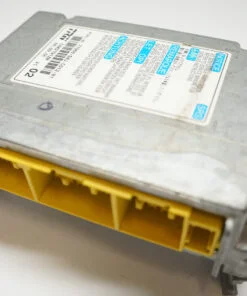
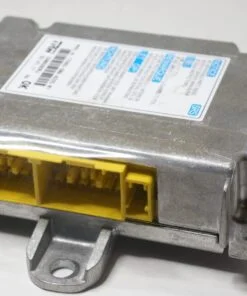
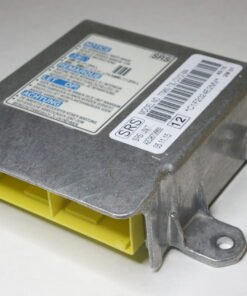
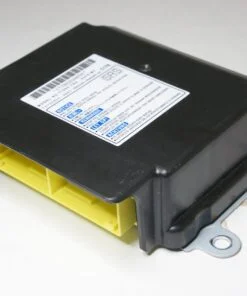
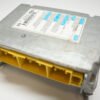
Honda Airbag Module Crash Reset Repair Service
$80.00
Honda Airbag Module Crash Reset & Repair Service — All Honda Models 1996–2026
Honda airbag module reset performed by Dan Karman — Honda SRS specialist since 1999, online since 2006. Full reset process documented on our YouTube channel. Reference updated April 2026.
Quick answer:
Every Honda SRS airbag module from 1996 through 2026 (part-number family 77960-XXX-XXX) can be bench-reset after a crash. Karmanauto clears the EEPROM crash record, wipes the internal lockout byte, and returns your original module same-day — plug-and-play, no dealer, no programming required on most models.
Why you need a bench reset, not a new module
After any airbag deployment, your Honda’s SRS unit stores hard crash codes and an internal lockout in EEPROM that no Honda HDS scan tool can erase. The dealer’s fix is a new module at $700–$1,200, VIN programming, and shop labor.
Our bench service reads the original EEPROM, wipes every deployment flag, event-data record, and the lockout byte, and ships the module back the same day. No HDS, no dealer trip, plug-and-play.
Covers every Honda SRS control module — 77960-XXX-XXX part number family, OEM Denso and Continental. All Honda models 1996 through 2026. Crash data cleared, hard codes removed, seatbelt pretensioner faults repaired. Same module returned, fully functional, programmed to original VIN configuration.
After a Honda is involved in any impact — deployment or not — the SRS (Supplemental Restraint System) control module stores a permanent crash code. That single stored code locks the airbag light on, disables seatbelt pretensioners, and in many cases keeps the seatbelts in the retracted locked position. The module will not clear this code with a scan tool. Dealers replace the entire module for $700 to $1,200 plus VIN-matched programming. We reset and repair the original Honda SRS module for a fraction of that cost, return it to factory-new internal state, and ship it back programmed to your original VIN so it drops in and functions exactly as the day it left the factory. Karmanauto has been resetting Honda airbag modules since 2006 — and the technician behind this service has been performing crash data resets since 1999, with over 25 years of hands-on experience on every Honda SRS module from the 1996 first-generation OBD-II Accord through the 2026 current-model-year Civic, Accord, CR-V, Pilot, Passport, Odyssey, HR-V, Ridgeline, Prologue, and every Honda in between.
This service covers every Honda model, every model year from 1996 to 2026, every body style, every trim level, every transmission, every domestic and Japanese market variant, and every Honda SRS module regardless of whether the airbags deployed, whether one airbag deployed, whether pretensioners fired, or whether the impact simply tripped the crash sensor without any visible deployment.
Don’t want to read the whole page? Here’s how it works.
Three simple steps. No dealer. No reprogramming. Your original module back, reset and ready to install.
Add to Cart & Pay
Click Add to Cart on this page and complete checkout. You’ll receive an email receipt with your order number and the shipping address to send your module to.
Print Receipt & Ship
Print your receipt or write your order number on a slip of paper and drop it in the box with the module. Ship to the address on your receipt — we operate from two locations, and your receipt tells you which one.
Reset & Returned
Same-day processing for modules received before 2pm. We clear crash data, preserve your VIN, and ship your original module back. Plug in, connect battery, SRS light goes out.
That’s it. Scroll down for full model coverage, part numbers, DTC codes, and the reset process — or just click Add to Cart and ship your module in.
Seatbelt locked or stuck? Read this before you ship.
If your seatbelt is locked, stuck, or will not retract after a crash, the pyrotechnic pretensioner inside the belt has fired. A fired pretensioner is a physical, one-time deployment — same as an airbag. Resetting the module alone will NOT unlock the belt.
To clear the SRS light you must do both:
- Reset the module (this service) — clears the crash record and the pretensioner-fired flag from the EEPROM.
- Replace or rebuild the fired seatbelt — the belt assembly itself needs a new OEM or OEM-equivalent pyrotechnic pretensioner unit. We do not supply belts; any Honda dealer, salvage yard, or seatbelt rebuild shop can.
Only after both the module is reset and the fired belt is replaced or rebuilt will the SRS light go out and stay out. If you ship us only the module and leave the fired belt in the car, the light will come right back on the moment you plug the module in — that is not a failed reset, that is a fired belt that still needs replacement.
Why Karmanauto — Verifiable Expertise You Can Check Before You Ship Your Module
Most airbag reset services are anonymous drop-box operations with no public face, no technical content, and no way to verify the people handling your module know what they are doing. Karmanauto is different, and every claim on this page can be verified independently.
25+ years of hands-on crash reset experience. The lead technician at Karmanauto has been performing Honda SRS module crash resets since 1999 — more than 25 years of continuous work on this exact system, across every generation of Honda SRS architecture from first-generation flash-code systems through current-gen CAN-bus modules with integrated occupant classification and high-voltage EV safety coordination.
Karmanauto operating since 1999, online since 2006. Over twenty-five consecutive years of automotive electronic module reset and repair, with the same depth of accumulated Honda-specific knowledge. Domain registration, business filings, and customer review history are all publicly verifiable.
Vehix411 YouTube channel — public technical guides since 2008. You can verify the expertise before you ship. The Vehix411 YouTube channel publishes Honda SRS module reset guides, ECU repair walkthroughs, crash data decode videos, seatbelt pretensioner explanations, and module removal tutorials — eighteen years of dated video evidence of hands-on work. Thousands of subscribers, hundreds of videos, real customer cars on the bench, real scan tool captures, real before-and-after reset demonstrations. If you want to see the work before you pay for it, watch the channel.
Training other shops since 2010 — hundreds of certified technicians nationwide. Karmanauto operates the Airbag Module Repair & Reset School, a professional training program teaching automotive repair shops, collision centers, and independent technicians how to perform Honda and Acura SRS crash resets correctly and safely. Since 2010 — sixteen years — we have trained hundreds of shops across the United States in the exact procedures, tooling, and EEPROM-level techniques used every day in our own facility. You can verify this directly by visiting the Karmanauto Airbag Module Repair & Reset School page — it is live, public, and has been continuously available on our site. If your local body shop or electronics specialist is performing Honda airbag resets, there is a meaningful chance they learned from our program.
What this means for your module. When you ship a Honda SRS module to Karmanauto, it is not being handled by a drop-box technician learning on your part. It is being reset by the people who teach other shops how to do this work — someone who has processed this exact generation of Honda SRS architecture tens of thousands of times, published public technical content about it, trained hundreds of competitors in the same procedures, and stands behind a public identity with a public YouTube channel and a twenty-year business record. If anything goes wrong with your reset, we are findable, contactable, and accountable — not an anonymous PO box.
When You Need a Honda SRS Airbag Module Reset
Honda SRS light stays on and won’t turn off
The most common reason a Honda SRS light refuses to turn off is a stored crash code in the airbag control module. This code is written permanently to EEPROM memory on impact and cannot be erased with a scan tool, HDS, or any OBD-II reader. The code stays forever until the module is either physically replaced or reset through direct EEPROM access at the chip level. If your Honda SRS light has been on since an accident, since a front-end collision, since a parking lot bump, since a fender bender, or since any event where the car felt a sudden deceleration, your module has a stored crash code.
Honda seatbelt is locked and won’t retract after an impact
This is one of the most misunderstood signals in the entire Honda SRS system. A locked seatbelt combined with an illuminated SRS light almost always means a crash code has been stored, even if no airbag deployed. Honda’s SRS system uses pyrotechnic seatbelt pretensioners that fire during sub-deployment impacts — the seatbelt retracts with force and then mechanically locks, and the pretensioner circuit reports “fired” to the SRS module. Once the module sees a fired pretensioner, it writes a permanent crash event record. No airbag deployment is required for this to happen.
Customers often bring us Hondas after minor impacts — a low-speed rear-end collision, a curb strike, a hard braking event that tripped the sensor, a parking lot fender bender — where the airbags did not deploy but the seatbelts locked and the SRS light came on. The module still has to be reset. The crash code is still stored. The seatbelt pretensioners still need to be replaced or refurbished. Once the module is reset and the pretensioner circuit resistance is back within spec, the SRS light clears, the module returns to factory state, and the car is ready for a new pretensioner install.
If your Honda seatbelt is stuck in the locked retracted position and the SRS light is on, you have a crash code. The module needs to be reset. This is true even if you did not crash — any event that fired the pretensioner circuit will cause this condition.
Honda SRS light on after airbag replacement
After an airbag deployment, many shops replace the physical airbag and clock spring but fail to reset the control module. The module still has the crash event in memory. The SRS light will not go out. This is the exact condition our service addresses.
Honda SRS light blinking or flashing codes
On 1996–2001 Honda models, the SRS module displays diagnostic trouble codes through the SRS warning lamp by flashing a pattern. If your SRS light is blinking a repeating pattern of flashes, the module is reporting a fault that needs diagnosis and often reset. We decode the flash pattern from your description and reset the stored code.
Dealer quoted a new airbag computer replacement
If a Honda dealer has told you the airbag module must be replaced and quoted you $700–$1,200 plus labor and programming, a reset almost always solves the problem for a fraction of that cost. Replacement is only required if the module has physical circuit damage (extremely rare except in severe fires or flood). Stored crash data is not damage — it is simply a memory bit that needs to be reset.
Honda airbag part-number coverage:
If your Honda SRS control module starts with 77960 (format 77960-XXX-XXX), it is supported. The 77960 prefix covers every Honda and Acura model from 1996 through 2026 — Denso units, Continental units, every trim, every region. If the suffix on your module is not explicitly listed below, ship it anyway — we reset it.
Honda 77960 Airbag Module Part Number Family Explained
Every Honda SRS control module built from the early 2000s onward uses the 77960-XXX-XXX part number family. This is Honda’s corporate part number prefix for the SRS control unit (SRSCM). Regardless of model, regardless of year, regardless of whether the module was manufactured by Denso, Continental, TRW, Autoliv, or any other Honda OEM supplier, if the part number on the module’s label begins with 77960, we reset and repair it.
The full format is one of two patterns: 77960-XXX-XXX (three letters, three letters or digits) or 77960-XXXX-XXX (four letters or digits, three letters or digits).
Examples of real Honda 77960-prefix part numbers we have reset, organized by model family:
Honda Accord: 77960-SDA-A83, 77960-SDA-L83, 77960-SDA-Y42, 77960-SDB-A82, 77960-SDR-A81, 77960-T2A-A21, 77960-T2F-A12, 77960-T2F-A22, 77960-T3V-A02, 77960-T3V-A91, 77960-TVA-A02, 77960-TVA-A12, 77960-TVA-A91, 77960-TVC-A02
Honda Civic: 77960-SNA-A82, 77960-SNA-A92, 77960-SNB-A82, 77960-SVA-A82, 77960-TR0-A91, 77960-TR0-A92, 77960-TR2-A21, 77960-TBA-A02, 77960-TBA-A82, 77960-TBC-A02, 77960-TEA-A02, 77960-TGG-A22
Honda CR-V: 77960-SWA-A82, 77960-SWA-A92, 77960-SWB-A82, 77960-T0A-A91, 77960-T0A-A92, 77960-T1W-A02, 77960-TLA-A02, 77960-TLA-A22
Honda Pilot: 77960-SZA-A82, 77960-STX-A14, 77960-STX-A24, 77960-TG7-A22, 77960-TG7-A91, 77960-TG8-A12
Honda Odyssey: 77960-SHJ-A93, 77960-TK8-A12, 77960-TK8-A22, 77960-TLA-A02
Honda Fit: 77960-SLN-A92, 77960-T5R-A02, 77960-T5R-A22
Honda HR-V: 77960-T7W-A12, 77960-T7W-A22, 77960-T7X-A12
Honda Ridgeline: 77960-SJC-A82, 77960-T6Z-A12, 77960-T6Z-A22
Honda Element: 77960-SCV-A82, 77960-SCV-A92. Honda S2000: 77960-S2A-A02, 77960-S2A-A82. Honda Insight: 77960-TM8-A12. Honda Passport: 77960-TGS-A12, 77960-TGS-A22. Honda Clarity: 77960-TRW-A02.
If your Honda module’s part number begins with 77960, we reset and repair it. This list is not exhaustive — we have reset thousands of Honda 77960-prefix modules and we cover every variant in the family. If you do not see your exact part number above, your module is still covered.
Honda Model Coverage Table
| Honda Model | Year Range | Part Number Prefix |
|---|---|---|
| Accord | 1996–2026 | 77960-SDA, -SDB, -SDR, -T2A, -T2F, -T3V, -TVA, -TVC |
| Civic | 1996–2026 | 77960-SNA, -SNB, -SVA, -TR0, -TR2, -TBA, -TBC, -TEA, -TGG |
| CR-V | 1997–2026 | 77960-SWA, -SWB, -T0A, -T1W, -TLA |
| Pilot | 2003–2026 | 77960-SZA, -STX, -TG7, -TG8 |
| Odyssey | 1999–2026 | 77960-SHJ, -TK8, -TLA |
| Fit | 2007–2020 | 77960-SLN, -T5R |
| HR-V | 2016–2026 | 77960-T7W, -T7X |
| Ridgeline | 2006–2026 | 77960-SJC, -T6Z |
| Element | 2003–2011 | 77960-SCV |
| S2000 | 2000–2009 | 77960-S2A |
| Insight | 2000–2026 | 77960-TM8 |
| Passport | 2019–2026 | 77960-TGS |
| Clarity | 2017–2022 | 77960-TRW |
| Prologue | 2024–2026 | 77960-current gen |
| Accord Hybrid | 2014–2026 | 77960-T3V, -TVA |
| Crosstour | 2010–2015 | 77960-TP6 |
| CR-Z | 2011–2016 | 77960-SZT |
All trims covered: LX, EX, EX-L, Sport, Touring, Si, Type R, Type S, Hybrid, Plug-in, EV, Black Edition, PMC Edition, HFP. All body styles: Sedan, Coupe, Hatchback, Wagon, SUV, Pickup, Minivan, Convertible. All markets: USDM, JDM, Canadian, Mexican, European variants — if the part number starts with 77960 we reset it.
Honda SRS Diagnostic Trouble Code Reference
This is the most complete Honda SRS DTC reference you will find. We have pulled, decoded, and reset every code in this list. After a crash reset, every one of these codes clears.
Flash codes (1996–2001 pre-OBD-II)
Pre-OBD-II Honda SRS diagnostics are read by grounding the SCS service check connector and counting the flashes of the SRS warning lamp. Pattern: long flash (tens) + short flashes (ones).
- Flash 1-1: Driver front airbag inflator circuit open or resistance out of range
- Flash 1-2: Driver front airbag inflator short to ground
- Flash 1-3: Driver front airbag inflator short to battery
- Flash 2-1: Passenger front airbag inflator circuit open
- Flash 2-2: Passenger front airbag inflator short to ground
- Flash 3-1: Clock spring / SRS cable reel fault
- Flash 5-1: Crash event recorded — module locked
- Flash 5-2: Backup power circuit fault
- Flash 6-1: SRS control unit internal fault
- Flash 9-1: Communication loss with instrument cluster
If the SRS lamp is on solid with no flashing pattern, the module is reporting a permanent crash record. If the lamp is flashing, decode the pattern and the code indicates the specific subsystem fault.
B-codes (2001+ OBD-II era)
Honda adopted standard OBD-II Body codes for SRS diagnostics starting approximately 2001, depending on model. The complete Honda B-code set we reset:
- B0001 / B0002 / B0003 / B0004: Driver frontal airbag deployment loop — open, short, low or high resistance
- B0010 / B0011 / B0012: Passenger frontal airbag deployment loop — open, short to ground, short to battery
- B0020 / B0021: Driver side airbag deployment loop — open, short
- B0024 / B0025: Passenger side airbag deployment loop — open, short
- B0028 / B0029: Driver side curtain airbag — open, short
- B0031 / B0032: Passenger side curtain airbag — open, short
- B0040 / B0042: Driver / passenger knee airbag circuit fault
- B0051: Deployment command issued — crash event in progress
- B0053: Deployment commanded and recorded — permanent crash code
- B0058: Multiple deployment commands recorded
- B0081 / B0083: Driver / passenger frontal impact sensor internal fault
- B0085 / B0087: Driver / passenger frontal impact sensor signal out of range
- B0092 / B0093 / B0094: Side impact sensors (B-pillar driver, passenger, rear) internal fault
- B1122 / B1123 / B1124: Driver seatbelt pretensioner — open, short, fired / deployment recorded
- B1150 / B1151 / B1152: Passenger seatbelt pretensioner — open, short, fired / deployment recorded
- B1170 / B1171 / B1175: Occupant classification system — calibration, signal out of range, weight sensor fault
- B1180: Seat position sensor fault
- B1190: Occupant detection module — internal fault
F-codes (Honda deployment + pretensioner combos)
Honda-specific F-series codes record combined airbag and seatbelt pretensioner deployment events on pre-SAE-standard Honda SRS modules. These are hard crash records written to module memory — no scan tool clears them.
- F1-11: Driver airbag + seatbelt pretensioner deployed
- F2-11: Passenger airbag + seatbelt pretensioner deployed
- F3-11: Driver side-impact airbag deployed
- F4-11: Passenger side-impact airbag deployed
If your Honda module shows F1-11, F2-11, F3-11, or F4-11, the module is 100% storing crash data and is internally locked. Our reset clears every F-code at the EEPROM level.
D-codes (same deployment memory family)
Honda D-series codes live in the same crash-event memory structure as the E and F codes. They log straight deployment events and rear-end collisions on Honda-specific SRS modules.
- D1-11: Driver airbag + pretensioner deployed
- D2-11: Passenger airbag + pretensioner deployed
- D3-11: Driver airbag deployed
- D4-11: Passenger airbag deployed
- D7-11: Rear-end collision detected
U-codes (network communication)
- U0151: Lost communication with SRS / restraint control module
- U0154: Lost communication with occupant classification module
- U0155: Lost communication with instrument cluster
- U0184: Lost communication with radio / information display
- U0401: Invalid data received from engine control module
- U0415: Invalid data received from ABS / VSA control module
- U2100 / U2101: CAN-bus initialization fault / configuration mismatch
E-codes (Honda crash / event memory)
Honda’s E-series codes are written to the SRS module’s event memory when a crash is detected. These are the codes that cause the permanent SRS light lockout even when no airbag deployed. They are Honda-specific pre-SAE codes — historical event records that must be reset at the EEPROM level.
Honda-specific E-codes we reset:
- E2-11: Passenger airbag deployed (hard crash record, module locked)
- E4-11: Passenger side-impact airbag deployed
Every event record we clear — full list:
- Front impact event recorded — driver accelerometer threshold exceeded
- Front impact event recorded — passenger accelerometer threshold exceeded
- Front impact event recorded — central (tunnel) accelerometer threshold exceeded
- Side impact event recorded — driver B-pillar satellite sensor
- Side impact event recorded — passenger B-pillar satellite sensor
- Side impact event recorded — driver door pressure-tube sensor (where equipped)
- Side impact event recorded — passenger door pressure-tube sensor
- Rear impact event recorded — rear satellite sensor threshold
- Rollover event recorded — roll-rate sensor threshold exceeded
- Pretensioner fire event recorded — driver seatbelt
- Pretensioner fire event recorded — passenger seatbelt
- Pretensioner fire event recorded — rear seatbelt (equipped models)
- Driver frontal airbag stage-1 deployment recorded
- Driver frontal airbag stage-2 deployment recorded (dual-stage inflator)
- Passenger frontal airbag stage-1 deployment recorded
- Passenger frontal airbag stage-2 deployment recorded
- Driver side (thorax) airbag deployment recorded
- Passenger side (thorax) airbag deployment recorded
- Driver side curtain airbag deployment recorded
- Passenger side curtain airbag deployment recorded
- Driver knee airbag deployment recorded (equipped models)
- Passenger knee airbag deployment recorded (equipped models)
- Multi-event crash sequence recorded (two or more impacts)
- Sub-deployment threshold event recorded (impact below deployment threshold)
- Soft-crash event recorded (low-speed impact, pretensioner only)
- Rear-end impact no-deploy event
- Sensor validation mismatch event
- Crash power-down abort recorded
- Backup capacitor energized / crash power circuit activated
- Deployment command issued but not confirmed (latched fault)
- Module locked flag set — permanent one-time-use lockout active
Note: Honda moved to SAE-standard B/U codes around 2013. Newer modules store deployment data in the data list rather than discrete E/F codes, but the reset process is identical — we pull, reset, and verify every stored event regardless of code format.
A stored E-code is why your Honda SRS light stays on after a minor fender bender where nothing deployed. Scan tools cannot clear these. Our reset clears every code in this list.
What the reset actually clears
Our reset clears the crash-related data stored in the module after a collision: the permanent crash record, deployment commands, pretensioner fire records, multi-event sequences, and the crash lockout flag. The module comes back to a non-deployed state so it stops triggering the airbag warning light from the crash event itself.
Our reset does not repair active fault codes caused by physical problems in the vehicle — for example a bad connector, broken wire, shorted clock spring, failed pretensioner, unplugged sensor, or open-circuit squib. Those codes return on the scan tool the moment power is restored because the underlying fault is still present. If a B, U, E, or F trouble code is caused by a real wiring or component issue, it has to be physically repaired in the vehicle.
Honda SRS Module by Model
Honda Civic SRS airbag module reset (1996–2026)
Honda Civic SRS modules are located under the center console in all generations from the 1996 EK through the current 11th generation. Part number series 77960-SNA, -SNB, -SVA (1996–2005 EK/ES/EM2 chassis), 77960-TR0 (2006–2011 FA/FG), 77960-TR2 (2012–2015 FB), 77960-TBA, -TBC (2016–2021 FC), 77960-TEA, -TGG (2022–2026 FL/FE). Civic Si, Civic Type R, Civic Hybrid, Civic CNG, Civic Hatchback, Civic Coupe, and Civic Sedan all use the same 77960-prefix module series within each generation. We reset crash codes, clear stored deployment events, repair seatbelt pretensioner circuit faults, and return the module programmed to your original VIN. Same-day turnaround on Civic modules.
Honda Accord SRS airbag module reset (1996–2026)
Honda Accord SRS modules are located under the front passenger seat on 1996–2007 models (CD/CG/CL chassis) and under the center console on 2008–2026 models (CP/CU/CR/CV chassis). Part numbers 77960-SDA (2003–2007), 77960-SDB, -SDR (2008–2012), 77960-T2A, -T2F (2013–2017), 77960-T3V, -TVA, -TVC (2018–2026). Covers Accord Sedan, Accord Coupe, Accord Hybrid, Accord Plug-in Hybrid. The Accord Hybrid module includes additional high-voltage battery safety circuits — we handle those resets correctly.
Honda CR-V SRS airbag module reset (1997–2026)
Honda CR-V SRS modules are located under the center console on all generations. Part numbers 77960-SWA, -SWB (2002–2011), 77960-T0A (2012–2016), 77960-T1W (2017–2022), 77960-TLA (2023–2026). The CR-V Hybrid uses the same SRS module family with an additional high-voltage cutoff input. We reset crash codes, clear pretensioner fire events, repair side curtain airbag squib resistance faults, and handle the occupant classification calibration reset that CR-V modules require after front passenger seat events.
Honda Pilot SRS airbag module reset (2003–2026)
Honda Pilot SRS modules are located under the front passenger seat or center console depending on generation. Part numbers 77960-SZA, -STX (2003–2008), 77960-TG7, -TG8 (2009–2022), with current generation using the latest 77960 family part numbers. Pilot third-row SRS includes side curtain airbag coverage for all three rows — more squib circuits, more potential deployment loop codes, same reset process.
Honda Odyssey SRS airbag module reset (1999–2026)
Honda Odyssey SRS modules are located under the front passenger seat on 1999–2010 models and under the center console on 2011–2026 models. Part numbers 77960-SHJ (2005–2010), 77960-TK8 (2011–2017), 77960-TLA (2018–2026). Odyssey SRS circuits include sliding-door side airbag coverage, third-row curtain airbag squibs, and rear-seat occupant sensing on Touring Elite and Elite trims. All circuits covered.
Honda Fit, HR-V, Ridgeline, Element, S2000, Insight, Passport, Clarity, Prologue, Accord Hybrid, Crosstour, CR-Z
Honda Fit (2007–2020): SRS module under the front passenger seat, part numbers 77960-SLN (2007–2014 GD/GE), 77960-T5R (2015–2020 GK). Honda HR-V (2016–2026): SRS module under center console, part numbers 77960-T7W (2016–2022), 77960-T7X (2023–2026). Honda Ridgeline (2006–2026): SRS module under center console, part numbers 77960-SJC (2006–2014), 77960-T6Z (2017–2026). Honda Element (2003–2011): SRS module under center console, part number prefix 77960-SCV. Element’s B-pillar-less door design means side impact sensor placement differs from conventional Hondas — we know the Element-specific side impact sensor codes. Honda S2000 (2000–2009): SRS module behind the seats in the rear bulkhead, part number prefix 77960-S2A. Convertible design means no side curtain airbags — only front airbags and seatbelt pretensioners. S2000 modules are known for storing phantom crash codes after hard cornering events on AP2 chassis. Honda Insight: ZE1 (2000–2006), ZE2/ZE3 (2010–2014, part 77960-TM8), and Civic-based third generation (2019–2022). Honda Passport (2019–2026): shares architecture with Pilot, part number prefix 77960-TGS. Honda Clarity (2017–2022): Fuel Cell, Plug-in Hybrid, and Electric all use 77960-TRW with high-voltage battery crash cutoff coordination handled correctly. Honda Prologue (2024–2026): first Honda EV on a Honda-specific platform; SRS coordinates with HV battery pack crash cutoff. Honda Accord Hybrid (2014–2026): standard Accord SRS plus high-voltage battery safety circuits. Honda Crosstour (2010–2015): part prefix 77960-TP6. Honda CR-Z (2011–2016): part prefix 77960-SZT.
Honda SRS Module Removal by Chassis Family
Honda center-console SRS module removal (Civic, Accord 2008+, CR-V, Pilot 2016+, Odyssey 2011+, HR-V, Ridgeline 2017+)
- Disconnect the negative battery terminal. Wait 3 minutes for SRS backup capacitor discharge.
- Remove the front floor center console trim. On most Hondas this is 2–4 screws under the shift boot or console lid, plus clip fasteners along the sides.
- Remove the center console armrest assembly. Disconnect any USB, 12V, or seat-heater harnesses.
- Lift the carpet to expose the SRS module mounting bracket on the transmission tunnel.
- The SRS module is a yellow or black rectangular unit with a single multi-pin harness connector. Release the connector’s sliding lock first, then lift the lever to disconnect.
- Remove the three 10mm or 12mm bolts holding the module to the tunnel bracket and lift it out.
Honda under-passenger-seat SRS module removal (Accord 1996–2007, Odyssey 1999–2010, Fit all years)
- Disconnect negative battery, wait 3 minutes.
- Move the front passenger seat fully rearward. Remove the four 14mm seat track bolts from the floor.
- Tip the seat backward, disconnect the seat harness connector (airbag, occupant sensing, seat heater), and lift the seat out to a padded surface.
- The SRS module is mounted to the floor pan directly below the seat. Release connector lock, disconnect, remove mounting bolts (typically 10mm), lift out.
Honda S2000 rear-bulkhead SRS module removal
- Disconnect negative battery, wait 3 minutes.
- Remove both seats (four 14mm bolts per seat plus harness connectors).
- Remove the rear carpet / bulkhead trim panel.
- The SRS module is mounted to the rear bulkhead behind where the seats sat. Release connector lock, disconnect, remove mounting bolts, lift out.
SRS safety notes for all removals
Always disconnect the negative battery terminal and wait a minimum of 3 minutes before touching any SRS wiring. Honda SRS modules contain a backup capacitor that retains enough charge to fire airbags for up to 3 minutes after battery disconnect. Do not use electrical test equipment on deployment circuits. Do not apply 12V to any SRS circuit under any circumstance. Store removed modules in their original ESD-protective bag or wrap in anti-static material for shipping.
The Karmanauto Honda SRS Reset Process
When your Honda SRS module arrives at our facility, here is exactly what happens.
- Intake and inspection. Your module is logged into our tracking system with your customer ID. Part number, VIN, and shipping date are recorded. The module is visually inspected for water damage, burn marks, connector pin damage, and physical cracks.
- Bench power-up. The module is connected to our bench harness that simulates the Honda vehicle environment. Power, ground, CAN-bus, and all squib circuits are simulated with dummy loads at the correct resistance values.
- Initial code read. We read every stored code — B-codes, U-codes, E-codes, F-codes, event memory, deployment records, crash data. A pre-reset report is generated and attached to your file.
- EEPROM access. Our Honda-specific programmer connects to the module’s EEPROM chip via the correct access pin configuration. Every Honda module generation uses a slightly different EEPROM access sequence — we have the tooling and know-how for all of them.
- Crash data erase. The specific EEPROM bytes that hold crash records, deployment flags, pretensioner fire events, and multi-event crash sequences are rewritten to their factory-default pattern. This is the step that no scan tool can perform.
- VIN integrity check. Your original VIN and configuration bytes are preserved. The module comes back with your exact VIN, your exact factory options, your exact production-date configuration. It will not throw a “wrong VIN” code when installed back in your Honda.
- Post-reset verification. The module is re-read after the erase. Every code from step 3 is confirmed cleared. A post-reset report is generated.
- Functional test. All squib circuits are tested at factory resistance specifications using our bench simulator. Communication with the simulated CAN-bus is verified. Sleep-mode current draw is measured. Wake-up timing is measured.
- Packaging and shipping. The module is placed in a new ESD-protective bag, cushion-wrapped, and shipped in a rigid box back to your address via the return method you selected.
Total turnaround: Same-day processing for modules arriving before 2pm local time. Standard shipping is FedEx Ground or USPS Priority Mail. Overnight options available.
Warranty, Turnaround, and Shipping
Our guarantee: Your module’s EEPROM is backed up on our servers before the reset and after the reset, filed under your order number. Reminder: the module reset alone will not clear the SRS light if a seatbelt pretensioner has fired — the fired belt must be replaced or rebuilt separately. See the seatbelt warning at the top of this page. The crash reset itself is guaranteed — if the module returns to your vehicle and does not clear the SRS light (assuming your installation is correct and your peripheral components are within spec), we recheck and re-reset it free. Every job is traceable by order number, before and after. This is a recheck guarantee, not a lifetime warranty — we do not claim anything we cannot honestly stand behind.
Turnaround: Same-day reset processing for modules received by 2pm. Typical customer experience: ship Monday morning, arrives Tuesday, reset Tuesday, returns Wednesday or Thursday.
Shipping: Ship your module to our facility using any trackable method. USPS Priority Mail flat-rate is the most cost-effective. FedEx Ground is fastest for continental US. International customers: we service Honda modules shipped from Canada, Mexico, UK, EU, Australia, and most other markets.
Packaging: Wrap the module in anti-static bubble wrap or ESD bag, place in a rigid cardboard box with padding, include a slip of paper with your name, phone number, email, return address, and vehicle VIN.
Questions about your specific part number, module location, or whether your situation is covered? Contact us before you ship — we would rather answer a part number question up front than have your module sit on the bench waiting for info.
What Our Honda SRS Reset Service Is Also Called
Customers search for this service under many different names. Every term below refers to the same service we perform on Honda airbag control modules: Honda SRS reset, Honda airbag reset, Honda airbag module reset, Honda airbag computer reset, Honda airbag control module reset, Honda airbag control unit reset, Honda airbag ECU reset, Honda SRS computer reset, Honda SRS control unit reset, Honda SRS control module reset, Honda SRSCM reset, Honda SDM reset (Sensing and Diagnostic Module), Honda RCM reset (Restraint Control Module), Honda ORC reset (Occupant Restraint Controller), Honda crash data reset, Honda crash data clear, Honda crash data erase, Honda crash data removal, Honda hard code clear, Honda crash flag reset, Honda post-crash reset, Honda after-accident reset, Honda 77960 reset, Honda 77960 repair, Honda airbag light reset, Honda airbag light repair, Honda airbag black box reset, Honda airbag EEPROM reset, Honda airbag chip reset, Honda SRS hard code clear. All the same service. We reset the module.
Honda Airbag Reset — Quick Answers
Can a Honda airbag module be reset after a crash? Yes — every Honda SRS module with part number 77960-XXX-XXX (1996–2026) can be bench-reset.
Do I need programming after install? No — the module is returned plug-and-play. Some 2018+ Civic/Accord variants may need a quick HDS relearn.
How long does the reset take? Same-day processing for modules received before 2 PM Pacific.
Will the airbag light stay off after the reset? Yes — as long as all deployed components (airbags, seatbelt pretensioners, clock spring) are replaced or repaired.
How much does a Honda airbag module reset cost? Karmanauto charges a flat $80 vs $700–$1,200 at the Honda dealer.
Frequently Asked Questions
Can a Honda airbag module be reset after a crash?
Yes. Every Honda SRS control module with part number prefix 77960 can be reset after a crash. The crash record is stored in EEPROM memory and is cleared through direct EEPROM access. A dealer will tell you the module must be replaced — this is not true unless the module is physically damaged. Resetting is a simple data operation that restores the module to factory state.
Is it legal to reset a Honda airbag module after an accident?
Yes. Resetting your own vehicle’s airbag module after a crash is legal in every US state, every Canadian province, and most international jurisdictions. The module is your property. The data in it is your property.
How long does it take to reset my Honda SRS airbag module?
Same-day processing for modules arriving at our facility before 2pm. Total turnaround from ship to return is typically 2–4 business days.
Will the airbag light come back on after you reset my Honda module?
No — provided the original cause of the crash code has been addressed. If deployed airbags have been replaced, if deployed seatbelt pretensioners have been replaced, if damaged impact sensors have been replaced, and the module wiring harness is intact, the SRS light stays off permanently after reset.
My seatbelt is locked and the SRS light is on. Did the airbags deploy?
Not necessarily. Honda seatbelt pretensioners can fire during sub-deployment impacts — the belt retracts, locks, and fires the pyrotechnic pretensioner without any airbag deploying. When the pretensioner fires, the SRS module records a permanent crash event. The SRS light comes on and stays on. The seatbelt locks and will not retract. The module must be reset, and the fired seatbelt pretensioner must be replaced. The airbags in your Honda are still functional — they simply did not deploy because the crash was below airbag threshold but above pretensioner threshold.
I had a minor fender bender and my SRS light is on. Do I need a reset?
Yes. Even minor low-speed impacts can trigger the crash sensor or fire a seatbelt pretensioner and store a permanent crash record. The module needs to be reset. Your airbags are likely still fully functional.
Can I drive my Honda with the SRS light on?
Mechanically yes, but not safely. The SRS light being on means your airbag system is in fault state — airbags may not deploy in a subsequent crash. Most states will not pass safety inspection with the SRS light on.
Where is the airbag control module located in my Honda?
Most 2008+ Hondas have it under the center console on the transmission tunnel. Most 1996–2007 Accords, 1999–2010 Odysseys, and all Fits have it under the front passenger seat. The Honda S2000 has it behind the seats in the rear bulkhead.
Do I need any programming or coding after the Honda airbag module reset?
For most Honda vehicles — no additional programming is needed. We preserve your original VIN and configuration bytes during the reset. Plug the module back in, reconnect the battery, the SRS light goes out, and you are finished. The only exception is the 2016 and newer Honda Civic, which needs ABS / VSA data synchronization and passenger seat occupancy sensor (OPDS) initialization after reinstall. These steps take 5–10 minutes with a Honda HDS scanner or a capable bidirectional OBD-II scan tool. We recorded the full step-by-step procedure on YouTube: 2016+ Honda Civic airbag reset programming procedure. Every other Honda from 1996 through 2026 — Accord, CR-V, Pilot, Odyssey, Fit, HR-V, Ridgeline, Element, S2000, Insight, Passport, Clarity, Prologue, Accord Hybrid, CR-Z, Crosstour, Prelude — goes back in with no coding, no programming, no scan tool required.
How much does it cost to reset a Honda airbag module?
Substantially less than dealer replacement. Dealer replacement runs $700–$1,200 plus labor and programming. See the price on this page for current reset service pricing.
Will Honda dealers detect the reset?
No. After our reset the module returns to factory state. A dealer scan tool reads the module as having zero codes and zero history.
What if my Honda has aftermarket airbags or seatbelts?
Aftermarket SRS components often have incorrect circuit resistance and will cause the module to throw codes on power-up. We recommend OEM or OEM-equivalent SRS parts only.
What if my Honda is a salvage title or rebuilt title?
We reset SRS modules on any Honda regardless of title status — salvage, rebuilt, reconstructed, clean, all the same to us.
Do you service Honda models sold outside the US?
Yes. Canadian, Mexican, European, UK, Australian, and JDM Hondas all use the same 77960 part number family. Ship internationally; we service the module and return it.
My part number starts with 77960 but I do not see it in your list. Is it covered?
Yes. Our list of example part numbers is not exhaustive. Every 77960-prefix module is covered. Ship it to us; we reset it.
Do you service Acura as well?
Yes. See our Honda & Acura airbag module reset service for TL, TLX, MDX, RDX, TSX, ILX, RSX, Integra, NSX, RL, RLX, CL, and all other Acura models.
What about the seatbelt pretensioners — do you replace those?
We reset the module’s record of pretensioner firing, but we do not supply replacement pretensioners. Fired seatbelt pretensioners are mechanical parts that must be replaced with new OEM or OEM-equivalent pretensioners.
Do you work with body shops and collision repair facilities?
Yes. We service collision repair facilities across North America. Same-day turnaround, wholesale pricing available. We also train shops in airbag reset procedures via our Airbag Module Repair & Reset School.
Where can I verify your expertise before shipping my module?
Three independent places. Visit the Vehix411 YouTube channel — eighteen years of dated technical video guides on Honda SRS module reset, ECU repair, and automotive electronics, continuously published since 2008. Visit the Karmanauto Airbag Module Repair & Reset School — live on our site, hundreds of shops trained since 2010. And Karmanauto has been in business since 1999, with Karmanauto.com in continuous online operation since 2006. Ask your local body shop if they have trained with Karmanauto’s airbag reset school — many have.
Related Airbag Reset Services
- Acura airbag module reset
- All-makes airbag clone & reset
- Airbag Module Repair & Reset School — for shops and technicians who want to learn airbag reset procedures directly from Karmanauto. Operating since 2010.
Watch how the reset works & 2016+ Honda Civic programming procedure
Bench crash-reset demonstration
The same read/write method applies to every Honda SRS module.
2016+ Honda Civic ABS + OPDS sync after reinstall
Step-by-step ABS data sync + passenger seat occupancy programming.
4 reviews for Honda Airbag Module Crash Reset Repair Service
Only logged in customers who have purchased this product may leave a review.
Ed Faber (verified owner) –
Arturo Guevara (verified owner) –
A+
John Moe (verified owner) –
Worked great fixed my problem!!
Ed Faber (verified owner) –